
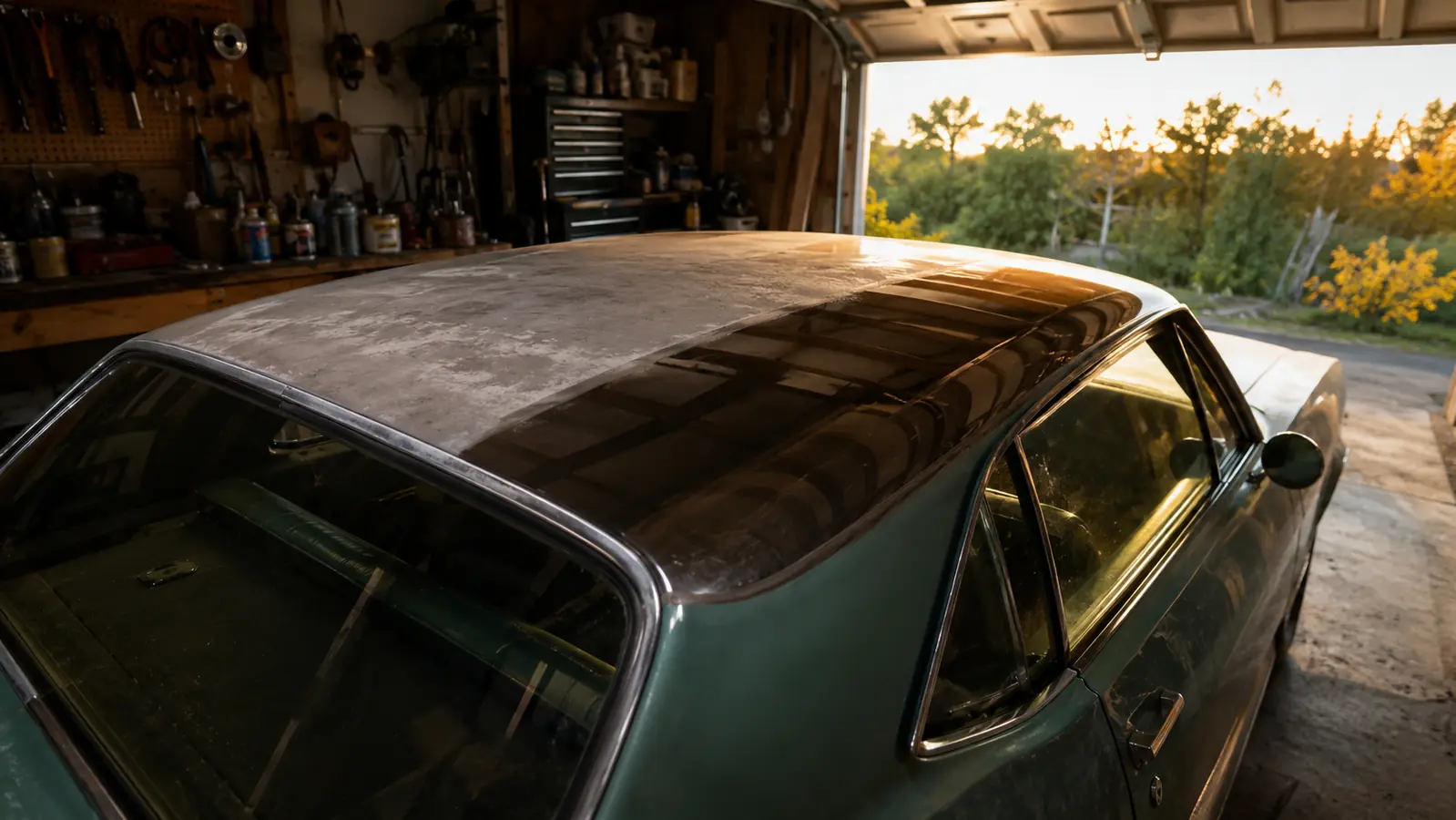
If you own anything with a single-stage paint job that sat outside, you know the look before I describe it. The hood goes flat. The color turns cloudy and chalky, and on a bad morning the roof looks like it spent the winter sandblasted with boredom. That is oxidation, the sun cooking the top layer of the paint, and for the past three years it is the one thing I have gone after with a bottle of Meguiar's Ultimate Compound on my own iron. I have a '66 Thunderbird that sat eleven years under a walnut tree, a six-cylinder coupe that lived its whole life parked in a field, and between them enough faded paint to know in advance what a used pad is going to pick up.
I'll be straight with you across the driveway. I am not going to tell you this is the single best compound money can buy, because I don't believe in the single best and neither should you. What I can tell you is what it has done on my cars over three seasons of weekend work, what it will not do no matter how long you rub at it, and where I set the expectations before I hand a neighbor the foam pad and the bottle. Meguiar's has earned its spot in my garage, but it earns it one panel at a time, same as everything else I own.
The Quick Verdict
The most forgiving hand-cut I have used on the paint that old cars actually wear. It brings chalky single-stage back without grinding through a thin coat, as long as the clear coat isn't already flaking and you don't expect it to fix what has gone past fixing.
Amazon Check Today's Price →Before You Price a Respray, Cut a Test Section First
Chalky paint is usually a surface problem, not a deep one. One pass with Ultimate Compound on a clean foam pad tells you in five minutes whether the color underneath is worth keeping. That makes it the cheapest diagnostic test I know for an old car.
Amazon Check Today's Price on Amazon →How I've Used It
Three cars over three years, and the oldest of them is a '66 Thunderbird in factory single-stage maroon. The roof and trunk deck took the worst of eleven years outside, and they were the first thing I cut. The six-cylinder coupe is single-stage too, an old car that spent most of its life in a pasture, and its hood taught me the limits of hand work. And because I wanted to see the bottle work on something modern, a buddy's '94 truck with cloudy factory clear coat from sitting at a construction site gave me the third data point.
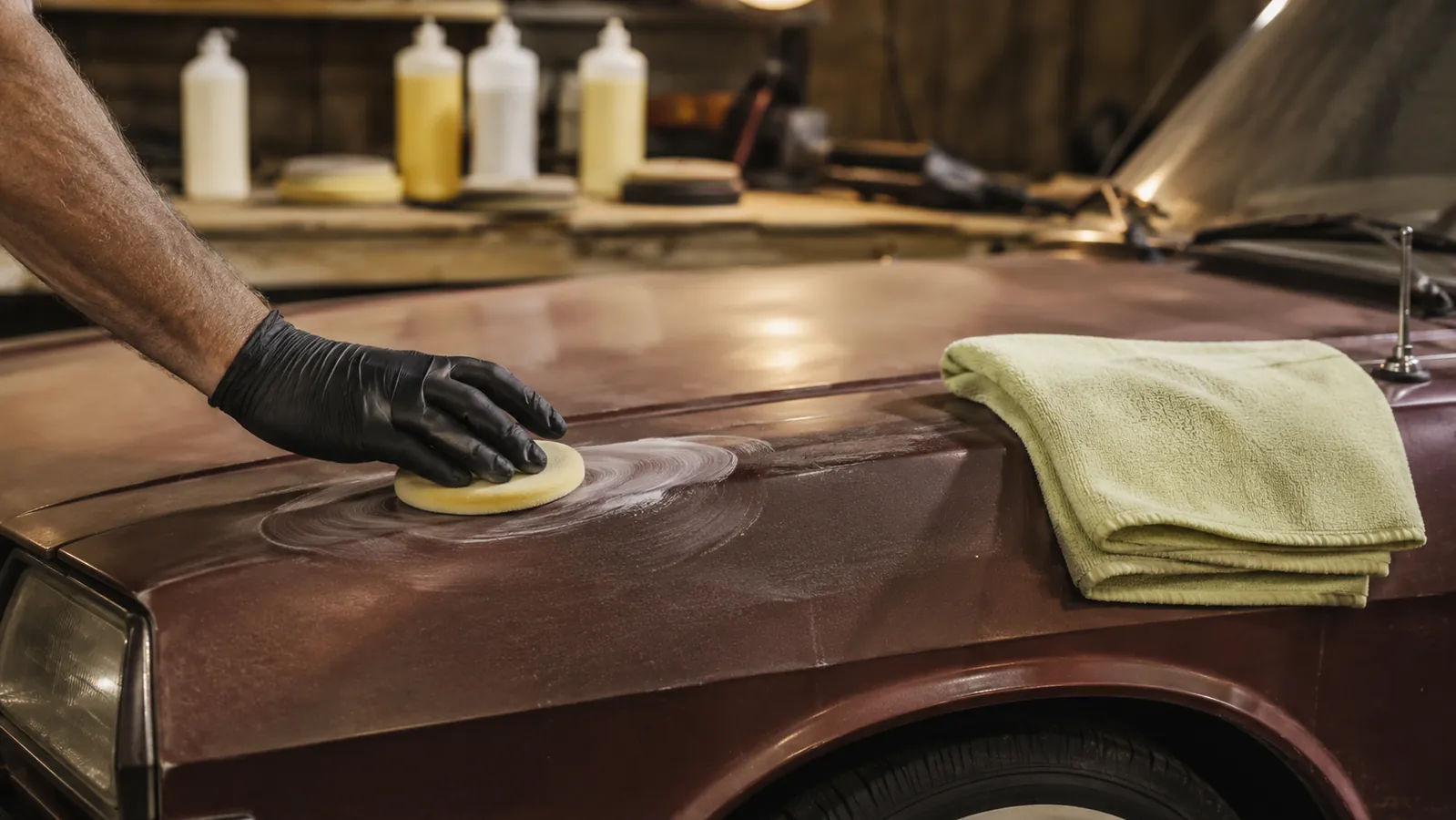
I do most of it by hand, because half the time I'm not in the mood to drag out a machine. A round foam applicator pad, a section about the size of my hand, moderate pressure, small overlapping circles. The rule that matters: the compound flashes faster than you expect, and the second it stops feeling slick and starts to grab, you wipe it with a clean microfiber towel. Let it dry and you are grinding powder into paint, which is its own special way to spend a Saturday. Brutus, the older bulldog, regards the whole operation from the shop chair like he's supervising, which in fairness he is.
On the Thunderbird roof, light oxidation, it took about forty-five minutes by hand and most of one pad. The coupe hood, which was worse, took the better part of an afternoon and taught me the section-size lesson the hard way. Those two jobs are the whole review, honestly. One easy, one stubborn, both finished with the same bottle.
Why a Compound Is Safe in a Beginner's Hand
Compounds work because they are tiny abrasives grinding the dead layer off the top of the paint. What separates a compound you can live with from one that punishes beginners is what the abrasive does as you work it. Ultimate Compound uses a micro-abrasive that starts out aggressive and gets gentler the longer you massage it. That trajectory is the whole trick: the more you work it, the less it cuts. A straight cutting compound just keeps grinding until you stop it, which is exactly how people eat through edges and paint details on their first attempt by hand.
It also carries a little polish in the mix, which is why Meguiar's sells it as a scratch remover and why it wipes off to a surface that's ready for wax instead of a hazy mess that needs a second product before it looks at you. On light swirls in clear coat, one pass usually pulls them. On a scratch you can catch with a fingernail, it will soften the edges so it looks better from ten feet, and that is exactly what I tell people to expect: better from ten feet, not invisible from six inches.
So it sits in a slot all its own, cutting more than a polish and far less than a true cutting compound. Plane guys will recognize the rule I live by here: prep is the part that holds the next part together, so you don't skimp on it. Paint is the same. If you need to hog real material off a car, that's where M105 comes in, and that's a machine product with a learning curve. I keep a bottle of it for the cars that need real correction. But Ultimate Compound is the one I'll hand to a man who has never compounded anything in his life and walk away.
Three Seasons on Real Paint
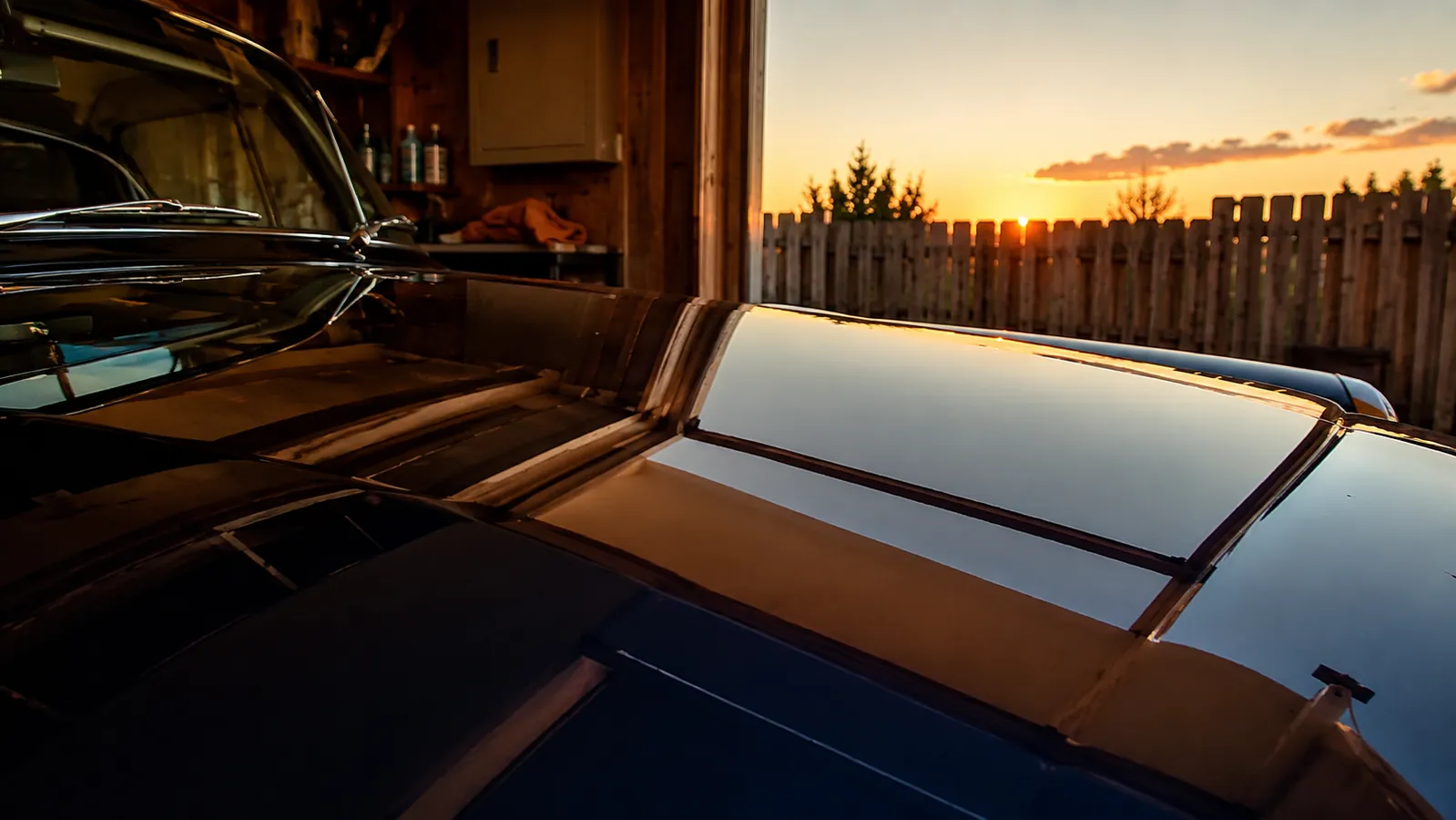
The first season was the Thunderbird roof and trunk deck, and that result is what sold me on the bottle. Oxidation removal does that thing where the color returns all at once: you wipe the section and the maroon is just there, like it had been standing behind a veil the whole time. I sealed it with carnauba wax and it stayed that way through the summer and into the fall.
The second season was the coupe, and it was the honest counterweight. The hood had years of tree droppings and neglect on it, and the paint was visibly thin on the crown and around the corners where the sun had beaten it. The compound pulled the oxidation off fine, but I had to respect those thin spots, because that's where a compound finds hollow film and goes through to primer if you lean on it. I shrank my sections, kept the pad flat, and let the product do the work instead of pushing it. It took longer and it went fine, but it went fine because I was careful, not because the bottle is magic.
The third season was the clear coat, and that's where this product is genuinely strong, and honestly the easier sale. Clear coat is thicker and less dangerous to cut, and the cloudy, dead top surface on that '94 truck came down to glassy in a single pass with a dual-action machine. Light swirls, water spots, the day-to-day haze that comes from sunshine and bad washing habits, that is squarely Ultimate Compound's territory.
One caveat I'll keep returning to, because it's the part nobody writes: every pass removes paint. It removes a microscopic amount, but that's the physics of compounding and you don't get to opt out of it. On an original-paint car you care about, this is a treatment for dead paint, not a weekly habit. You cut once, you seal, and you put the bottle back on the shelf.
The Tradeoffs Nobody Puts on the Bottle
Dusting is the one that gets everybody. Work a section too long, lean on it too hard, or let it flash dry and you get a fine white powder in the air that settles on every flat surface in the shop and smells like a faint, sweet chemical you can't quite place. It wipes off easy enough, but it finds its way into trim crevices and behind emblems, and you'll be coaxing it out of door seams for a week afterward. The fix is the same as it always is: smaller sections, less dwell time, wipe sooner.
It's picky about temperature, too. In real heat it flash-dries and dusts before you can finish a panel. In the cold it doesn't break down right and you chase it around like it owes you money. It wants a temperate garage, which in my case means I do most of the cutting in the warm half of the year, and in January I stay inside and rebuild a carburetor instead. That's just the tool being honest about its limits, and I'd rather know them up front.
And it is not a paint fix, full stop. Chips, deep scratches, clear coat that has already started to flake, paint that a prior owner killed with a bad rattle-can wet sand, none of that is a compound's job. It polishes the surface it's given. It does not repair a surface that has already given up.
What I Reach For Alongside It
By hand, the kit is small. A foam applicator pad that costs pocket change, a stack of clean microfiber towels, painter's tape if I want a clean test section before committing to a whole panel, and a tin of carnauba wax to seal whatever I bring back. That's the whole program, and it fits in a grocery bag.
When a car is bad enough that hand work won't cut it, I step up to a dual-action machine and, to be honest, something with more bite than Ultimate Compound. But for nine out of ten 'this paint looks dead' conversations I have across the fence, this bottle by hand is the entire answer. It is also the cheapest way I know to find out whether a faded hood is skin-deep or gone three layers down, because one clean section tells you in ten minutes what you'd otherwise learn after someone hands you a respray estimate. That alone is worth keeping a bottle on the shelf. Dottie, the younger bulldog, has started napping on the warm hood of the roll-around shelf I push the buffer back under, which tells you the machine doesn't come out as often as I pretend it does. That's the honest measure of this bottle. For routine dead paint, the machine stays put away.
How Long the Fix Holds
Straight answer: as long as the paint underneath is healthy, and as long as you seal it. The Thunderbird roof I cut in the first spring is still maroon three years on, because it lives in the garage now and I put a coat of wax on it every spring. The truck that sits outside all year will go chalky again within a season no matter what I do, and that's not the product's fault. The sun cooks paint. The compound just takes the burned layer off.
I budget for it like an oil change, not like a restoration. Once a season on the cars that sleep indoors, twice on anything forced to live in the weather. Twenty minutes on a roof keeps a car presentable at a cruise-in, and the cars I care most about get touched once, waxed, and that's the whole year. That rhythm is realistic, and realistic is what I'll tell you rather than selling you a bottle as a one-and-done fix.
And one more honest sign to watch for: when a test section stops improving, stop cutting. If you work the same spot twice, wipe it, and it looks the same after the second pass as it did before it, the paint below is thin or too far gone for any compound to matter, and every extra rub is just thinning what's left. I've waved people off a roof that way more than once. The compound makes a fine tool for telling you the truth, and the truth it tells is sometimes that a respray is genuinely coming after all.
The roof went from a color I had to apologize for to the maroon it left the factory with, and it cost one bottle and a Saturday morning.
What I Liked
- Brings chalky, oxidized paint back on the first pass, and you can watch the color return while you work
- The diminishing abrasive cuts gentler the longer you work it, which is what makes it safe in a beginner's hand
- Wipes off clean with a towel, no sticky haze left fighting you for a second product
- Works as well by hand as it does on a dual-action machine, so one bottle covers both worlds
- A little goes a long way; one bottle did the Thunderbird roof and deck plus the whole coupe hood
Where It Falls Short
- Dusts if you linger on a section, and that powder gets into every crevice and trim seam
- It cuts paint, full stop. Every pass removes a thin layer, so it's not for habitual use on fragile original paint
- Won't touch deep scratches, chips, or clear coat that is already flaking
- Finicky in extremes: it flash-dries in heat and goes tacky in cold, so it wants a real garage
Who This Is For
If you've got a classic whose paint has gone flat and chalky but isn't flaking, you are exactly who this bottle is for, and you should try it before you price anything expensive. If you're working by hand and you're not an expert, I can't think of a more forgiving place to start. If the clear coat on your daily driver has gone cloudy from sun, one pass pulls the life back into it and it looks right as rain. And if you're staring at a hood wondering whether a respray is coming, this is the test that tells you whether the color underneath is worth saving at all.
Who Should Skip It
If the clear coat is already cracking and flaking, step away from every compound on the market, this one included, because you'd be polishing a failure. If you've got scratches that catch a fingernail or genuine chips, no hand-cut compound fixes those, and pretending otherwise just wastes an afternoon. And if your goal is serious correction on a car heading to a show, you want machine compounds and the machine to push them, which is a different shelf entirely. For those cars I point you at the M105 comparison, because that's the conversation you actually need to have.
The Cheapest Paint Test in the Garage
If your paint is chalky but not failed, one clean section tells you everything you need to know. That's why my bottle lives within arm's reach of the shop door, and why I'll hand it across the driveway before I ever suggest a paint job.
Amazon Check Today's Price on Amazon →