
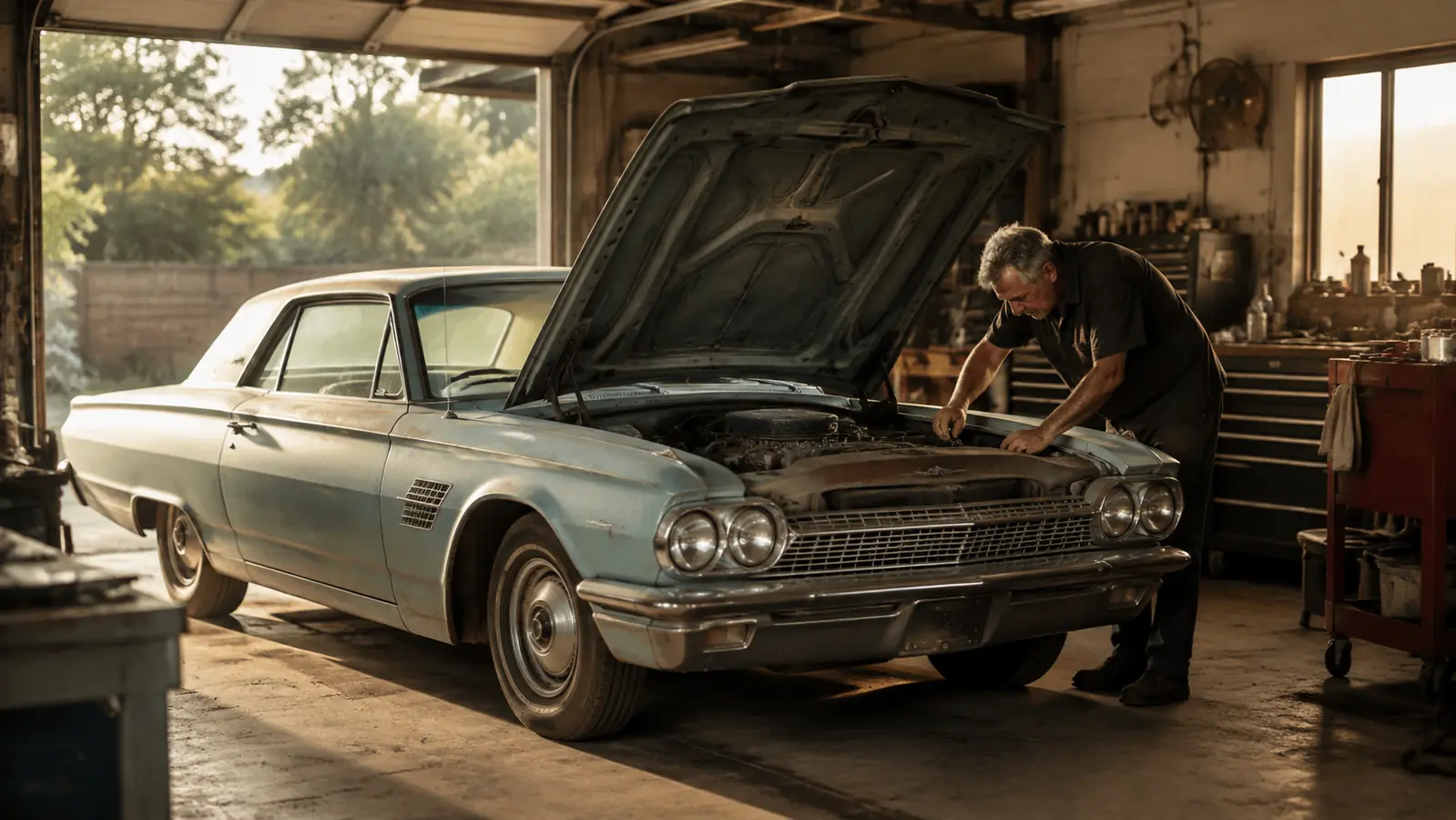
The thing you saw first when you walked past the Thunderbird in the garage was the hood, and not in a good way. Years of sitting and too many summers of sun had turned the paint chalky, a dull whitish gray in the patches where the light hit hardest. I'd clean it and wax it and it would look like a car for about a day, then the chalk came right back. Every guy who walked past it at a show said the same two words: 'needs paint.' I didn't want to hear it, mostly because I was pretty sure they were right.
The catch was what a respray would really mean on that car. It's a '62 Thunderbird with the original single-stage paint, and a proper two-stage job on a car with this much chrome costs more than the car would ever bring at a show. I don't cry over that math, but I also don't throw a good car away over a bad finish, so there it sat. Best car I own, wearing the worst paint I've ever owned. The only thing that made me pause before calling the paint shop was a memory of Meguiar's Ultimate Compound working on a buddy's faded fender years ago.
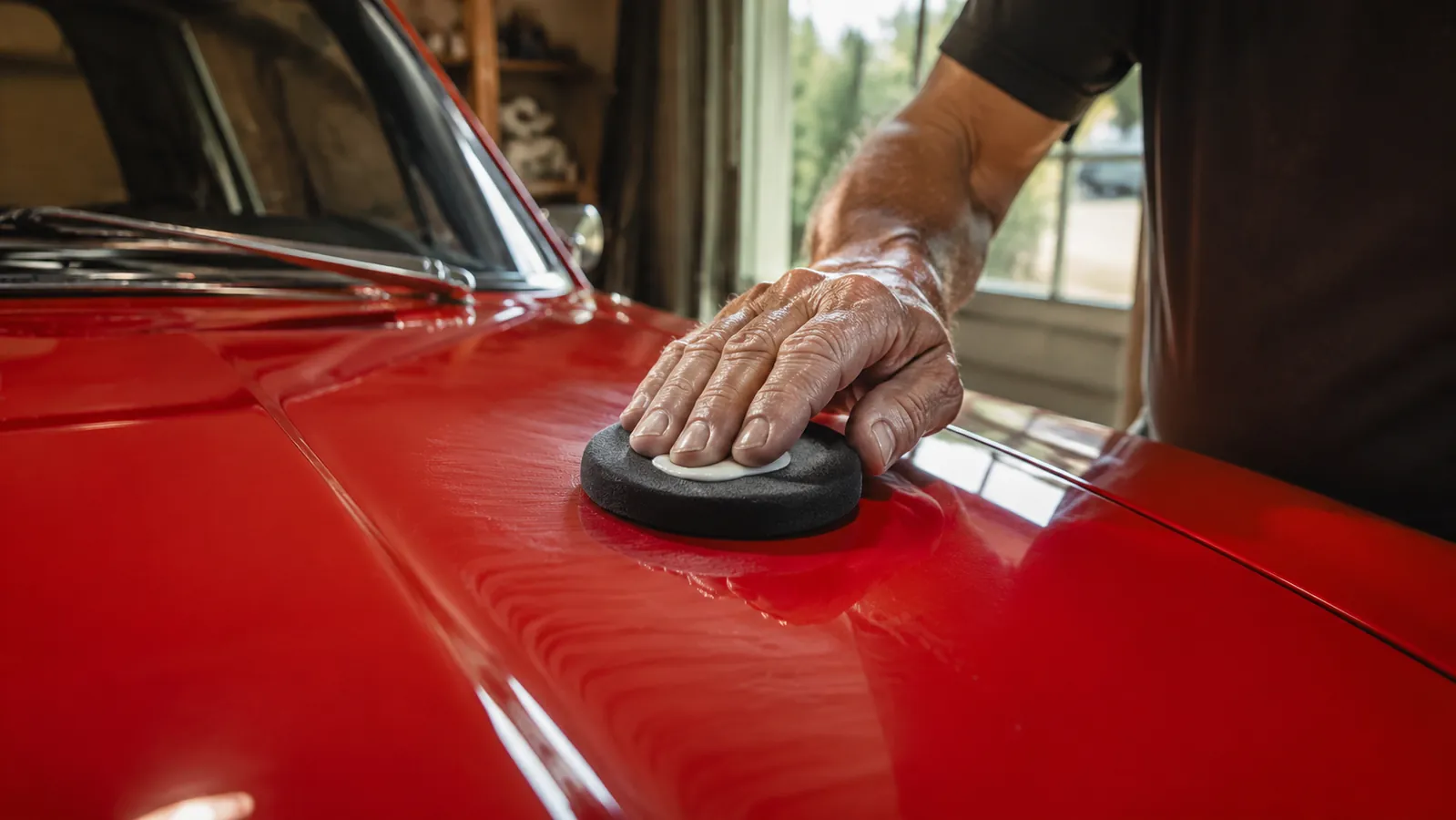
I thought about it the way you think about an airplane: you don't strip a wing just because the paint is tired. First you find out what's actually underneath. A friend who restores old planes hammered that into me years ago. Patch test first, always. So on a Saturday morning, instead of calling the paint shop, I dug a foam applicator and a bottle of Meguiar's Ultimate Compound out of the detailing drawer and told myself I'd spend one afternoon finding out whether that hood was dead or just disguised.
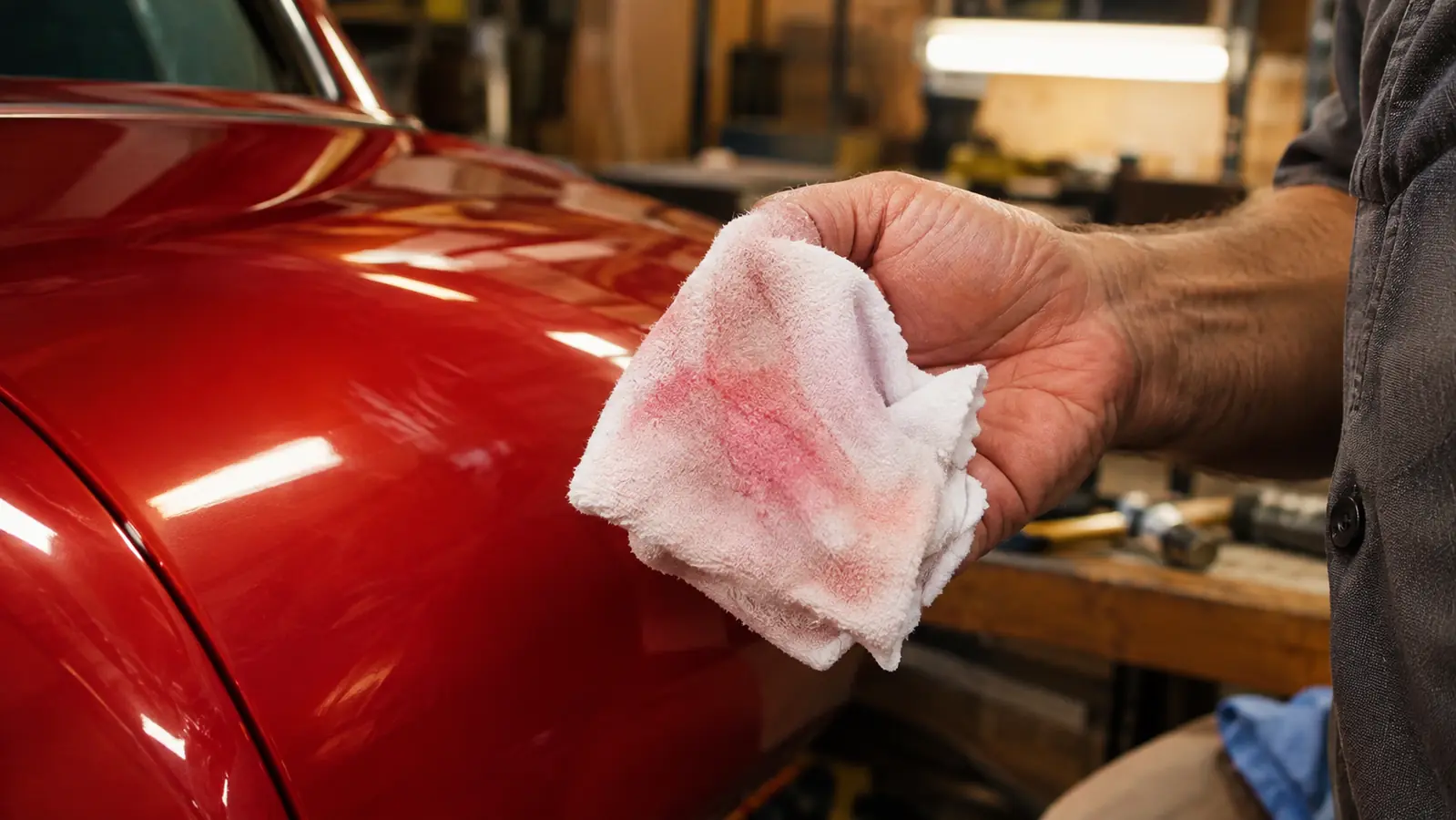
The rule with compound by hand is boring on purpose. Work a small section, use modest pressure, let the product do the work. I picked a patch about the size of a legal pad on the worst part of the hood, worked the foam pad in slow overlapping passes, no more pressure than it takes to rub a sore shoulder, and wiped it clean with a dry microfibre. Two minutes on that one patch and I laughed out loud in an empty garage. The white was gone, and underneath was red. Not a museum red, but the red that hood wore in '62. The rag came away pale pink, and that pink was two summers of sunlight coming off the car.
The rag came away pale pink, and that pink was two summers of sunlight coming off the car. The red underneath had been there the whole time, just buried under chalk.
Your Faded Paint Might Still Be Under There
Before you book a respray, spend one Saturday finding out whether your paint is dead or just disguised. A bottle of Meguiar's Ultimate Compound and a foam applicator is the cheapest diagnostic tool I own.
Amazon Check Today's Price on Amazon →I was smart enough to stop at one patch, then dumb enough to scale up too fast, and both parts taught me something. The whole hood is not a test patch, and compound punishes eagerness. I worked the rest of that hood in two-foot sections and it took most of the afternoon, longer than the can hints. Then I got greedy on a fender, leaned on the pad a little too hard, and the color went flat right there on the spot. Had to back off and rework it slower. Compound is like any machine work. Don't lean on it and it'll be kind to you. Lean on it and it'll let you know.
I sealed it with a good paste wax the following weekend, the carnauba kind, not because the compound needed it but because fresh-cut paint has no protection of its own. That's the step most people skip. Compound removes the dead layer and leaves the paint naked, and naked paint goes dull again fast. At the show the next month, nobody said 'needs paint' about the hood. A couple of guys asked what I'd spent on the respray. I told them the truth: about an afternoon and one bottle. They didn't believe me, which is also their right.
Here's what that afternoon actually bought, and I want to be straight about it because the internet oversells this stuff. Compound buys back faded, oxidized paint on a car that still has paint worth saving. It does not touch a scratch you can catch with a fingernail, it will not put color back where it's gone down to primer, and no bottle in the world will fix a clear coat that's already lifting. Meguiar's will tell you the same thing in plain English. The hood today looks like a car somebody cares about again. The door ding from 2019 still owns that door ding.
The bulldogs were not impressed, which is their job. Dottie sniffed the pink rag, sneezed, and went back to her spot under the workbench. Brutus stared at me like I'd wasted the afternoon of his nap. They're right about most things, and they were partly right about this one. The car still needs plenty of work. But it does not need paint, and that is not nothing.
What I'd Tell You If We Were Sitting at My Kitchen Table
If you were sitting across from me with a cup of coffee, here's what I'd say. Before you spend real money on a respray, spend one Saturday and a small amount of money on a bottle of real compound and a foam applicator. Work a two-foot patch on the worst panel and look at what comes up on the rag. If it comes away colored, your paint has life in it. If it comes away dry and gray, you've lost an afternoon, and you can call the paint shop with a clear conscience. Patch test first, always. It's true on a wing and it's true on a hood. I wrote the longer version of all this in my full review of Meguiar's Ultimate Compound, and there's a plain list of reasons compound brings faded paint back that's worth reading before you spend a dime on a painter.
The Saturday Test Costs Almost Nothing
Pick up a bottle of Meguiar's Ultimate Compound at today's price, spend one afternoon on the worst panel, and let the color that comes up on the rag make the decision for you.
Amazon Check Today's Price on Amazon →