
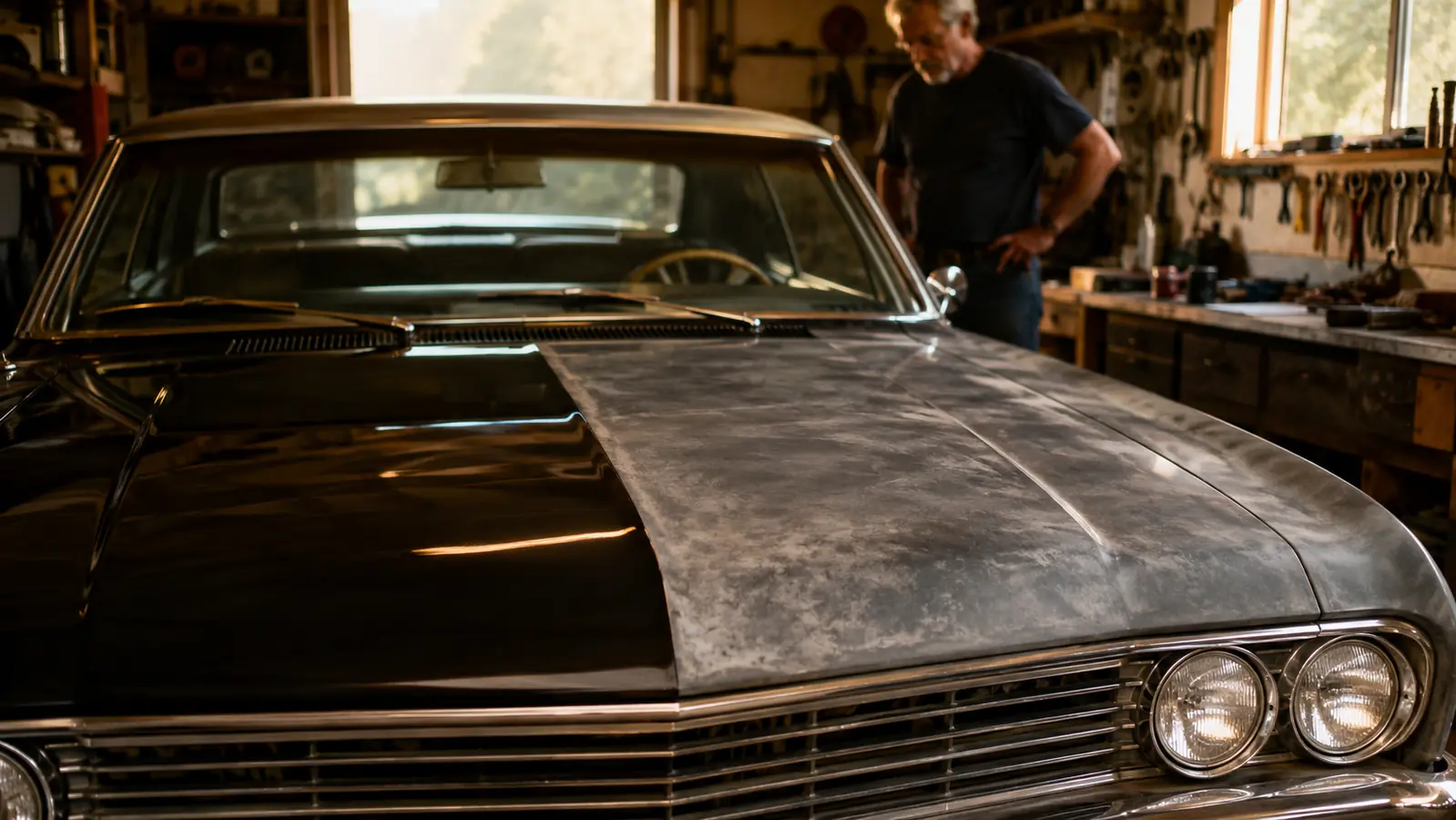
The day a hood stops reflecting, most guys start pricing a respray. I was one of them. My Thunderbird's roof had gone chalky gray after too many summers parked nose-first into the sun, and I had a body shop number in my pocket before I talked myself into the cheap experiment first. That experiment was a bottle of Meguiar's Ultimate Compound and a foam pad, and it brought enough color back that the body shop number went back in the drawer.
I'm not going to tell you it made the paint new. Nothing does, short of new paint. What it did was cut the dead layer of oxidation off the top of old single-stage paint, and that is where almost all of the fade actually lives. In most cases the color underneath is still there, just buried under a gray film. A compound is the cheapest way to find that out, and here are ten reasons doing it beats writing a check to a spray booth.
Before You Pay for a Spray Booth, Try This First
One bottle of Meguiar's Ultimate Compound and a Saturday afternoon can tell you whether the color under your faded paint is worth saving. Check today's price on Amazon.
Amazon Check Today's Price on Amazon →It Cuts Oxidation Without Cutting Through to Primer
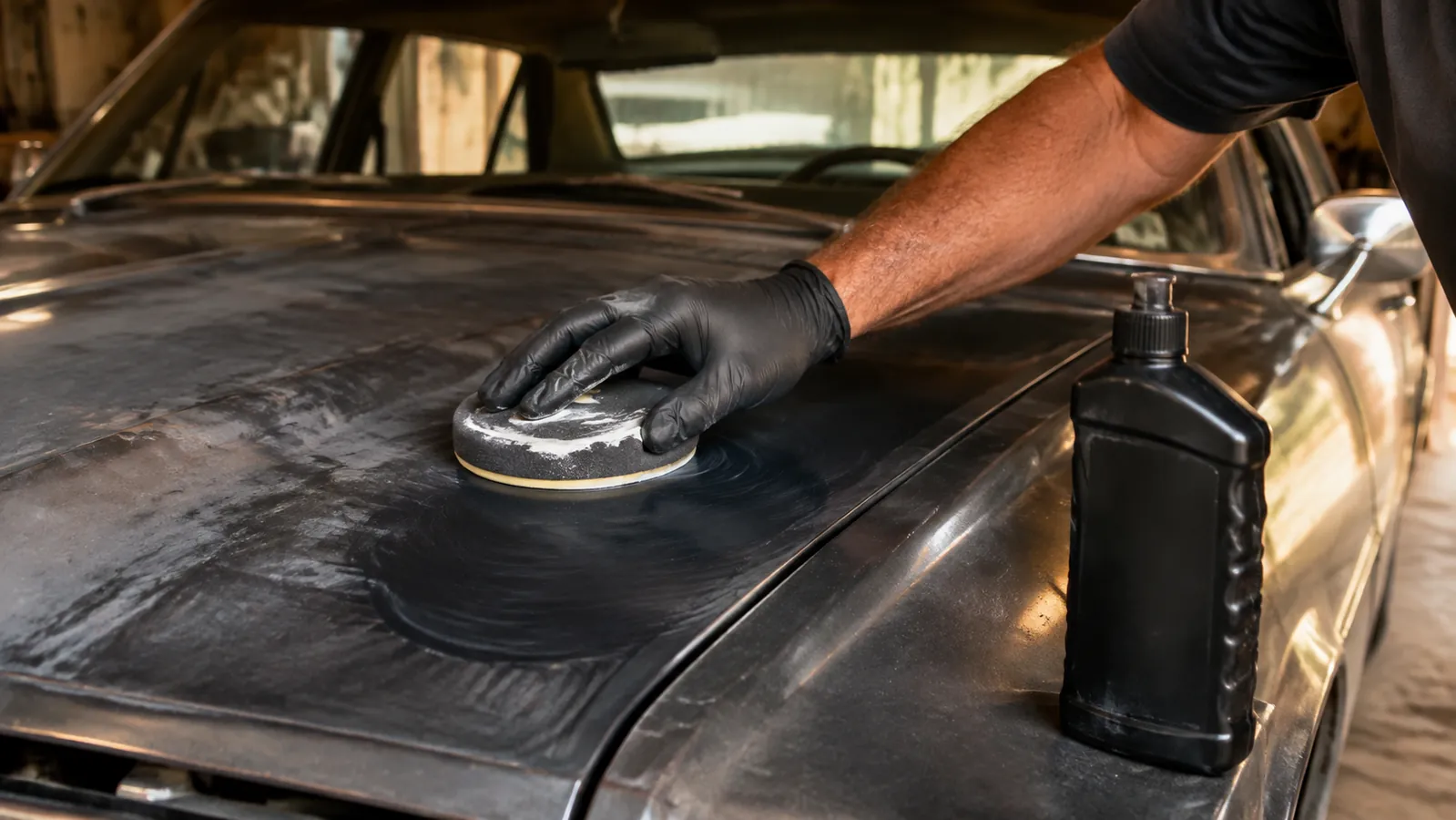
Single-stage paint fades because the top layer oxidizes and turns chalky. The compound is an abrasive suspended in a carrier, and it shaves that dead chalk off in microns. By hand you control the pressure, so you can stop the second color comes back instead of risking a burn-through. I've cut a '70 F-series hood with nothing but compound and a foam pad, and primer has never shown through once. Primer showing through is what turns a weekend job into a repaint, so slow and light is the whole game.
It Brings Out the Color That's Still Underneath
The gray you're staring at isn't a color change, it's a film sitting on top of the color. On my Thunderbird the roof looked cooked, and after one pass the maroon came back in vertical streaks. A second pass evened those out. That's the moment you realize the paint wasn't dead, it was just wearing a sweater. Most faded cars are carrying their original color under about a thousandth of an inch of fog.
It Works Fine With Nothing but Your Arm
You don't need a machine to get a result. Hand-cutting with a foam pad is slower, sure, but for a hood or a roof it's a weekend job. I'm a fan of dual-action polishers for big jobs, but for one faded panel the arm method is free and nearly impossible to botch. Keep the pad flat, work in small circles, use light pressure, and let the compound do the cutting. Your forearm gets a workout, your paint doesn't take a gamble.
It Pulls Decades of Old Wax and Grime Out of the Paint
Old single-stage paint loves holding onto layers of wax that have gone hard and yellow, and that old wax reads as dullness. Soap won't touch it, but a compound cleans it off the way nothing else can. The first pass on a survivor car always leaves a dirty pad. That brown stuff is dead wax and road grime, not your paint, so don't panic and stop. Keep moving, the pad stops loading up after the top gunk is gone.
It Tells You Whether a Buff Will Work Before You Commit
This is the diagnostic reason, and it's the one that saves you the most money. Cut a two-foot square on the worst panel and see what comes back. If color returns, the whole car will cut. If the paint has gone to powder and won't come back, you've spent twenty minutes learning what a body shop would charge you good money to teach you. Check before you commit, it's the same rule I use before I pull an aircraft part apart, time spent inspecting is never wasted.
It Hides the Fine Scratches That Make Old Paint Look Worse Than It Is
Swirls and light scratches live in the same top layer as the oxidation, so the cut that fixes the fade takes most of them out too. Nothing short of touch-up will fix a deep rock chip, and I won't pretend otherwise. But the general worn, walked-on look, the one that makes a good car photograph like a bad one, comes off in a single pass. That's usually all it takes to change how the whole car reads.
It Preps the Surface So Wax Actually Survives the Summer
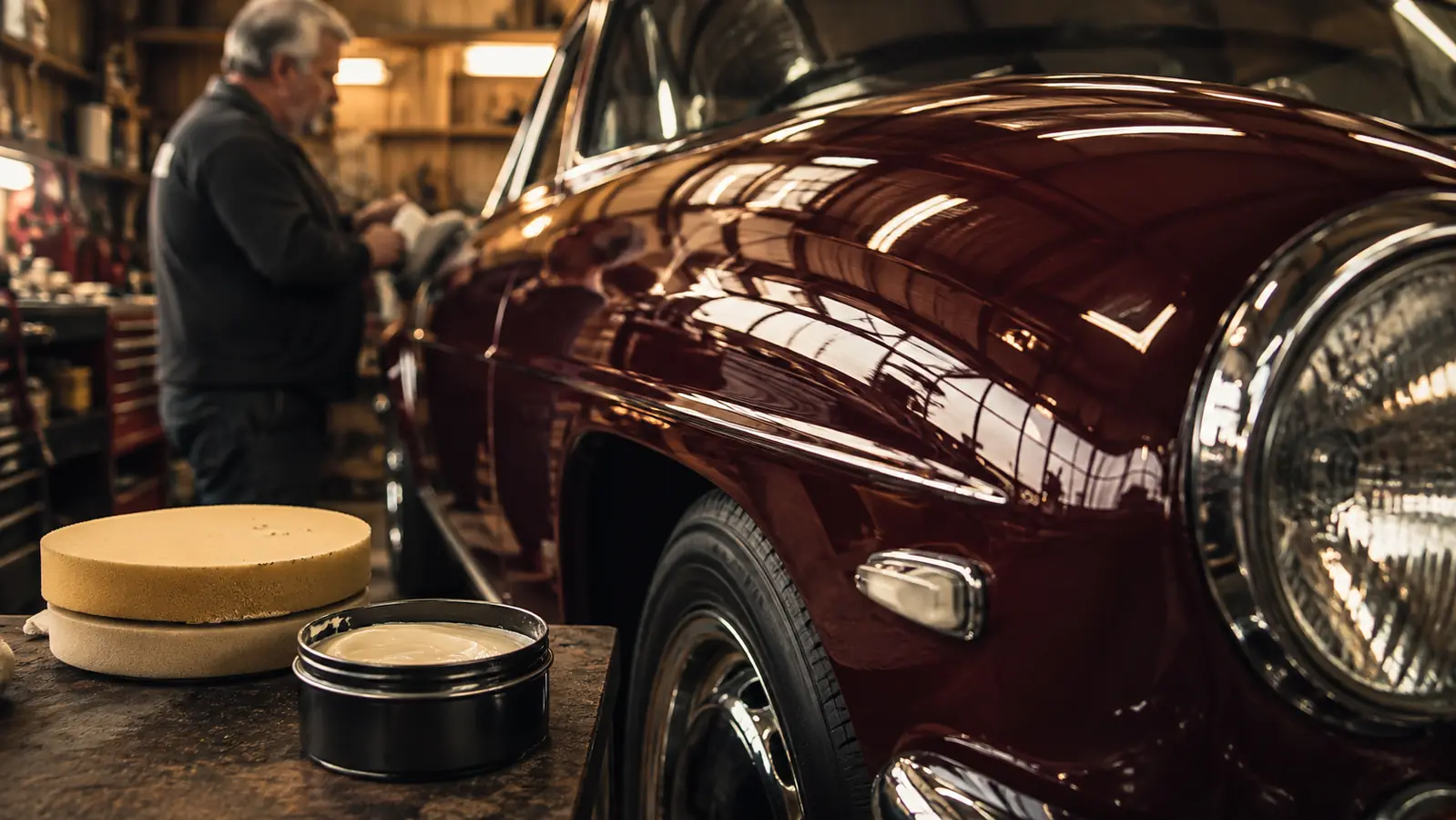
Wax can't bond to chalk. The best wax on the market won't last a month if it goes onto a dead, oxidized layer, it just sits on top and washes off with the first rain. Cut the fog off first and the wax goes on smooth and holds through the season. I also do my waxing in the garage in the evening, never in direct July sun, but that's a separate sermon. Compound first, wax second, that's the order that earns its keep.
It Evens Out Faded Spots Into the Surrounding Paint
Horizontal panels fade faster than vertical ones because the sun hits them square all day. A hood that's gray in the middle and still glossy at the edges reads as patchy, like the car is wearing a saddle. Cutting the whole panel brings the center and the edges down to the same layer, so the car looks even again instead of blotchy. Half the time that uniform look is all an old car needs to start getting compliments again.
It's the Cheapest Way to Add Years of Life to Original Paint
A bottle of compound costs a fraction of a paint job, and if it buys you two more summers before a real spray, those are two summers driving a car that still turns heads at the gas station. More to the point, cutting the oxidation off now stops it from eating deeper into the paint while it sits. Fog left alone keeps degrading the layer under it. A bottle of it is the cheapest preservation you can do for a car you can't afford to spray twice.
It Tells You What You're Working With Before the Next Owner Does
If you just bought the car, or you're about to sell it, the cut test answers more questions in one afternoon than a month of poking around. It will show you whether the car was repainted, whether the roof is still original lacquer, whether somebody clear-coated over single-stage paint. Every one of those changes how you care for it from here on. Learning that for the cost of a bottle is far better than learning it from a body shop estimate.
What I'd Skip
For all the good a compound does, it has a ceiling, and knowing where that is saves you a wasted Saturday. If the clear coat is flaking off in patches, that's not fading, that's clear coat failure, and no abrasive on earth brings that back, it needs a respray. Same thing if the paint has gone chalky to the touch and wipes off on your finger, the color underneath is already gone. And if the panel is throwing rust, fix the metal before you touch the paint, a compound won't save a hood that's turning to dust. Compound is for paint that's tired, not paint that's dead.
The maroon came back in vertical streaks on the first pass, and right then I knew I wasn't repainting that roof.
Found Color Under the Fog? Finish the Whole Job Right
One bottle of Meguiar's Ultimate Compound will handle the entire car if you take it in sections, hood to fenders to door tops. Check today's price on Amazon.
Amazon Check Today's Price on Amazon →