
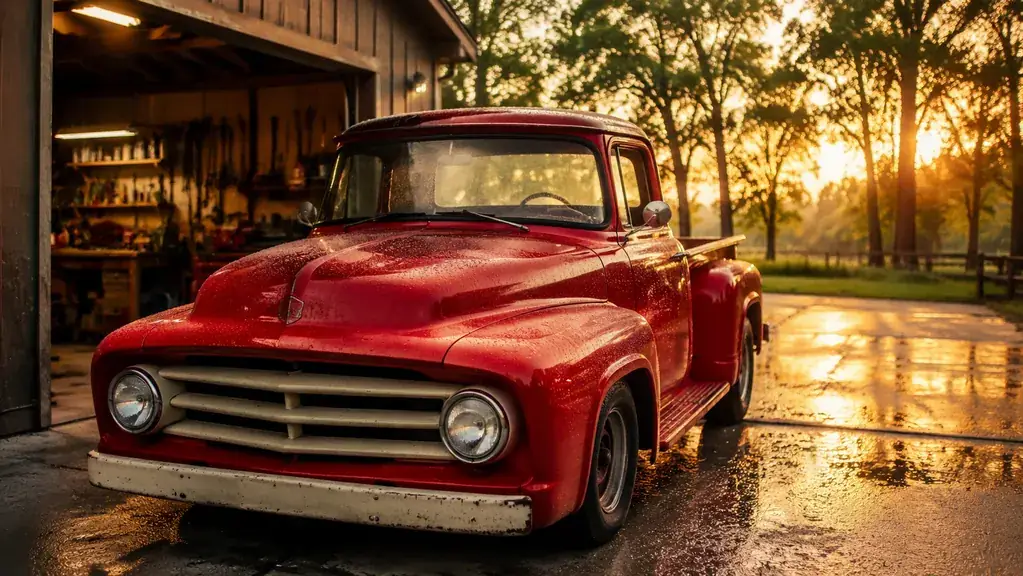
If you wash a single-stage classic the way you wash a daily driver, you are sanding the paint off with your hands. You already know that feeling: the paint that goes chalky no matter what you do, the swirls you put in yourself the first summer because you skipped the hose-down and went straight at it with a wet mitt and a squirt of dish soap. I spent years doing exactly that to old cars before I understood the order of things. The soap you reach for every wash matters more than the polish you break out once a season, because the wash happens fifty times a year and the polish happens once.
This is my long-term review of Chemical Guys Honeydew Snow Foam, the one-gallon jug I put through a foam cannon for a full year of washing my `60s F-series, my Thunderbird, and whatever else rolled in and out of the shop. I am not here to tell you it transforms anything. It is a car wash soap, and a good one, and I will tell you exactly where it earned its keep and where I would not bother with it.
The Quick Verdict
The most forgiving wash soap I have used on aging single-stage paint, with enough suds to actually sheet loose dirt off before your mitt touches the panel. It is more costly per wash than a plain bucket soap, and that is the honest trade.
Amazon Check Today's Price →A gallon that sees you through a season of washes, not a month
If you are still washing a classic with dish soap, this is the cheapest insurance you will buy this year. A one-gallon jug of Honeydew lasts a long time in a foam cannon, and it does not strip the little bit of shine old paint has left.
Amazon Check Today's Price on Amazon →How I've Used It
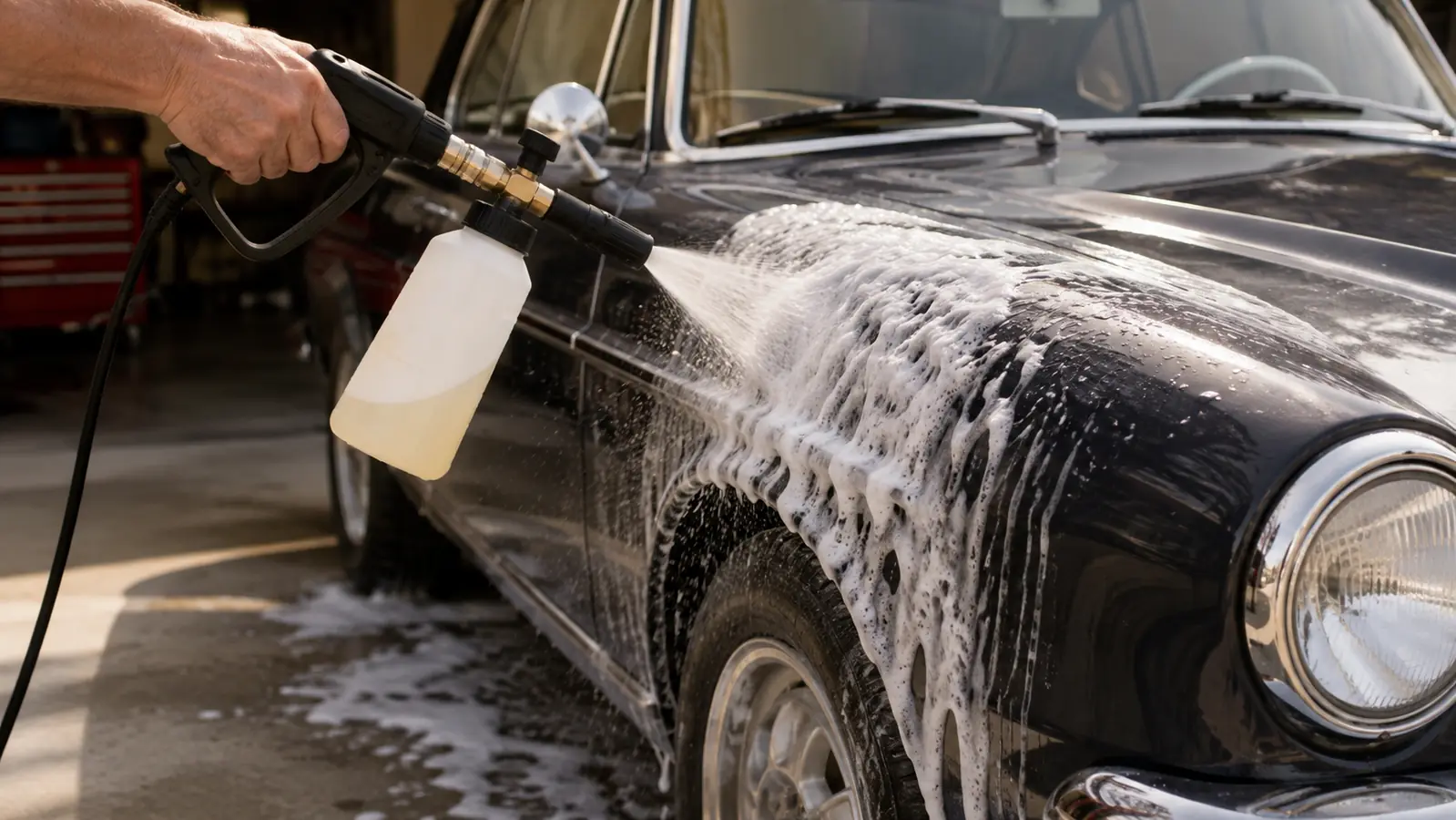
I bought the gallon back in the spring and chewed through it washing two single-stage trucks and a clear-coat Thunderbird through the whole season and into it. My routine every weekend was the same: foam the car top to bottom with the cannon, let it dwell four or five minutes while the suds drag the loose grime down the panels, then rinse the worst of it off before I ever put a mitt on the paint. The whole point of foam is that the soap does the heavy lifting of lifting dirt off the panel so your hand does not have to push it around and grind it into the paint.
I used it straight in the cannon, about an ounce and a half to a couple ounces per fill, and in a bucket for the final pass on the lower panels where the road grime lives. I did not dilute it down to nothing the way the marketing makes it sound. If I was going to rely on the suds to carry dirt away, I wanted enough soap in the water to actually do the job, so I tilted toward the generous side of the label and let the results tell me if I had it wrong.
I recorded the weird, concrete details because that is what a year of use gives you. How long the suds actually cling before they start running off (about four minutes on a cool morning, less once the panels warm up). How it behaves in hard water, which we have plenty of. And whether the sweet honeydew smell, which everyone mentions, ever stops being the room's whole personality. More on all of that below.
What a Year of Foam Did to the Paint
The headline result is that nothing bad happened to the paint over those fifty-odd washes, and with aging single-stage that is the win. Single-stage paint has no clear coat on top of the color. Every wash that strips oils off the surface is a wash that leaves that old enamel a little drier, a little chalkier, a little more likely to oxidize. Honeydew is pH balanced, meaning it sits close to neutral instead of on the alkaline side where a lot of aggressive soaps live, so it does not aggressively strip what little wax and protection is already sitting on the car.
My `60s F-series has some original paint left on the hood and roof, and I watched it all summer. It did not get drier, it did not chalk up faster, and the shine I put on it in the spring was still there at the back half of the year. That is not Honeydew adding anything. It is Honeydew not taking anything away, and with fragile old paint, not taking anything away is the entire job.
The suds themselves are genuinely thick when you get the mix right, the kind that cling to a vertical fender instead of running straight off, and that dwell time is what lets the soap sheet off the heavy dirt before you touch it. Loose road film, pollen, and that fine brown dust that finds its way onto everything in a shop all lifted off in the rinse. What stayed behind was the stuff that is stuck for real, and that is what the mitt is for.
Getting the Dilution Right
The single biggest mistake people make with a snow foam soap is not getting the mix strong enough, then deciding the foam is a gimmick because it ran straight off the hood in a film. Honeydew wants a real dose of soap in the cannon, and it wants the water to be drawn first so the jug agitates before you pull the trigger on the car. The first couple of washes I ran it too light, got thin suds, and almost wrote the whole thing off. Once I leaned into the label's recommended ratio the suds got thick enough to actually cling, and that changed everything.
The other part is contact time. I let the foam dwell while I get the wheels and the lower sills, then I come back and rinse before the foam dries. If you let foam dry hard on a warm panel, you just traded one problem for another, so I work in sections on hot days and keep the car wet. That is less a fault of Honeydew and more a rule of any foam wash in the sun. On a cool spring or fall morning it is not even a question.
Where It Earned Its Keep on Chrome and Trim
I look at old chrome the way I look at old paint: both are unforgiving and neither gets better with a harsh product. Honeydew is mild enough that I never worried about it on the brightwork around the grille and the trim strips, and it rinsed off clean without leaving the streaky film you get from soaps that are heavy on dyes or fragrances. The gallon has a noticeable scent, and I mean noticeable, but it stays in the bucket and comes off in the rinse rather than leaving a coating on the car.
The one thing I would not do is trust the foam alone to clean the car and call it done. On a satin-black interior piece or an area with heavy, stuck-on grime you still need contact wash with a mitt and a second bucket. Honeydew will not dissolve dried bird droppings or tar. No wash foam that is gentle enough for single-stage paint is going to, and Chemical Guys does not pretend otherwise. That is not a fault, it is just the boundary of what this product is.
One thing I kept an eye on all year was hard water, because that is where a lot of soaps betray you. We have hard water here, and a soap that leaves spots or a film on chrome is a soap I end up wiping down after. Honeydew rinsed off clean even in our water, which is not something I can say for every wash soap I have owned. The clear-coat Thunderbird was the real test. Clear coat is picky about what touches it, and I saw no clouding, no dulling, and no residue building up over the dozens of washes I gave it. That is the kind of thing that only shows up after you have used a soap for a while, not on the first wash.
The Bulldog Test and Other Honest Notes
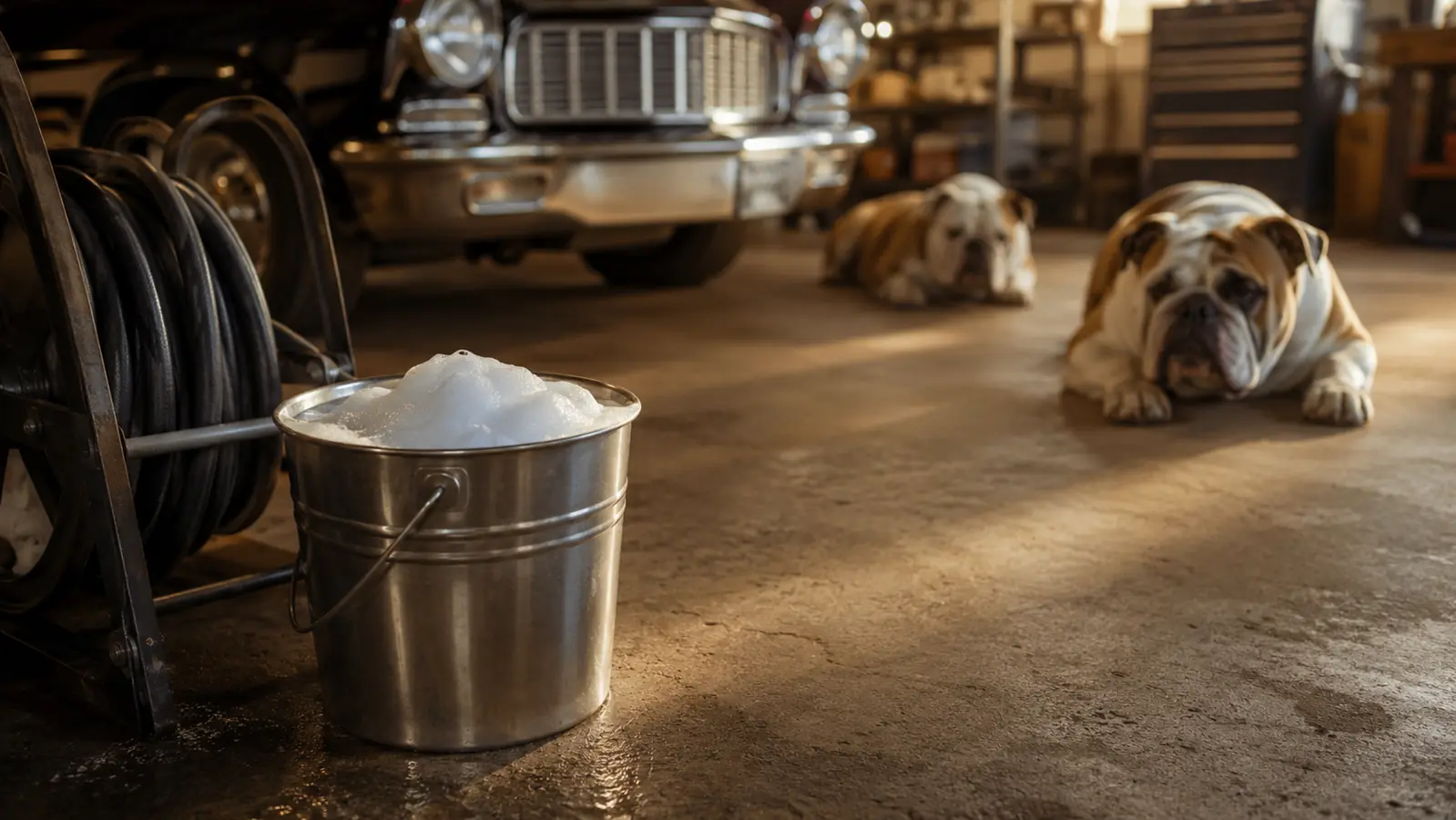
My two bulldogs, Brutus and Dottie, have opinions about every project in the garage, though mostly they just supervise from a patch of floor where they can keep an eye on the hose. Brutus has decided the foam is unsettling and keeps his distance. Dottie thinks the spray pattern is a new kind of toy and tried to lunge at the cannon once, which I would not recommend to anyone, bulldog plus foam cannon is not a combination you want. The point is the stuff rinses off a concrete floor without leaving a slick mess, and it washes off skin without drying it into a rash, which is more than I can say for the harsh citrus degreasers I keep on the other shelf.
On dilution and cost: Honeydew is not the cheapest way to wash a car. A plain bucket soap, something with zero foam, at a capful per bucket will cost you less per wash. The one-gallon jug seems expensive at a glance because you price it against a small bottle, but at the ounce-and-a-half to two-ounce rate I run in a cannon, it lasted me the whole season and then some. Per wash it is a modest premium over a basic soap, and you are paying for the pH balance and the dwell time that actually protect fragile paint. Whether that premium is worth it depends on what you are washing.
What Honeydew does is not add anything to the paint. What it does is not take anything away, and with aging single-stage, not taking anything away is the whole job.
What I Liked
- pH balanced and gentle, so it does not strip the life out of aged single-stage paint over a full season of washes
- Thick, clinging suds that dwell long enough to sheet off loose dirt before your mitt ever touches the panel
- Rinses clean off chrome, glass, and bare concrete without a streaky film
- A one-gallon jug goes a long way in a foam cannon, stretching across a whole season
Where It Falls Short
- Costs more per wash than a plain bucket soap, and the one-gallon jug looks spendy up front
- Will not touch dried bird droppings, tar, or stuck-on grime, you still need contact washing for those
- The honeydew scent is strong enough that it can take over the whole bay for a bit
- You need a foam cannon to get the snow-foam experience; in a plain bucket it is just a decent pH-balanced soap
How It Compares in My Wash Routine
The honest comparison is not against other foam soaps, it is against the way you are washing the car right now. If you are using a harsh household detergent, Honeydew is a real step up and it will show in what your paint looks like at the end of a summer. If you are already using a mild car wash soap in a bucket, Honeydew's advantage narrows to the foam dwell time and the suds, which are genuinely nicer, and whether that is worth the premium is a fair question you have to answer for your own car.
I have also run this same soap side by side with a few other washes I keep around, and Chemical Guys deserves credit for making the suds the star instead of hiding behind marketing. A lot of foam soaps give you thin suds that run off before they do anything. Honeydew, mixed right, gives you foam that sits there and works. That dwell time is the whole difference between a foam that protects your paint and a foam you wave at the car before you get out the mitt anyway.
For me, the deciding factor was the fragile paint on the F-series. I would rather spend a few cents more per wash to know I am not slowly stripping the last of the shine off an irreplaceable hood. When the paint is fifty years old and you cannot buy a replacement, the cheap soap stops being a bargain the first time you watch it dry out the finish. That is the same reason I never skimp on the bolt that holds a control surface on an airplane. It is the part that holds things together, and you do not cheap out there either.
Who This Is For
This is for the classic car owner who has fragile or original paint, who washes often, and who wants the gentlest reliable wash they can get without breaking the bank. It is also for anyone who has a foam cannon already and wants a soap that actually suds up thick enough to matter. If you own a single-stage car and you care about the factory finish, paying the small premium for a pH-balanced foam is one of the cheapest ways to protect it over the long haul.
Who Should Skip It
Skip it if you wash with a plain bucket and a mitt and you do not want to buy a foam cannon, because without the cannon much of Honeydew's advantage is going to waste. Skip it if you have a modern daily driver with tough clear coat that you wash with whatever is cheapest, because you are not the person paying for the gentle touch. And if heavy grime removal is your primary need, if you are cleaning a car that sat in a barn for years, get a dedicated cleaner first and let Honeydew be the maintenance wash that keeps it clean afterward.
Protect the finish you can't replace
A year of washes convinced me this is the gentlest everyday soap I have on the shelf, and Chemical Guys has earned my trust with it. If you have original paint you are trying to hold onto, grab the gallon and see what a season of foam does for it. Your hands will thank you for the extra suds too.
Amazon Check Today's Price on Amazon →