
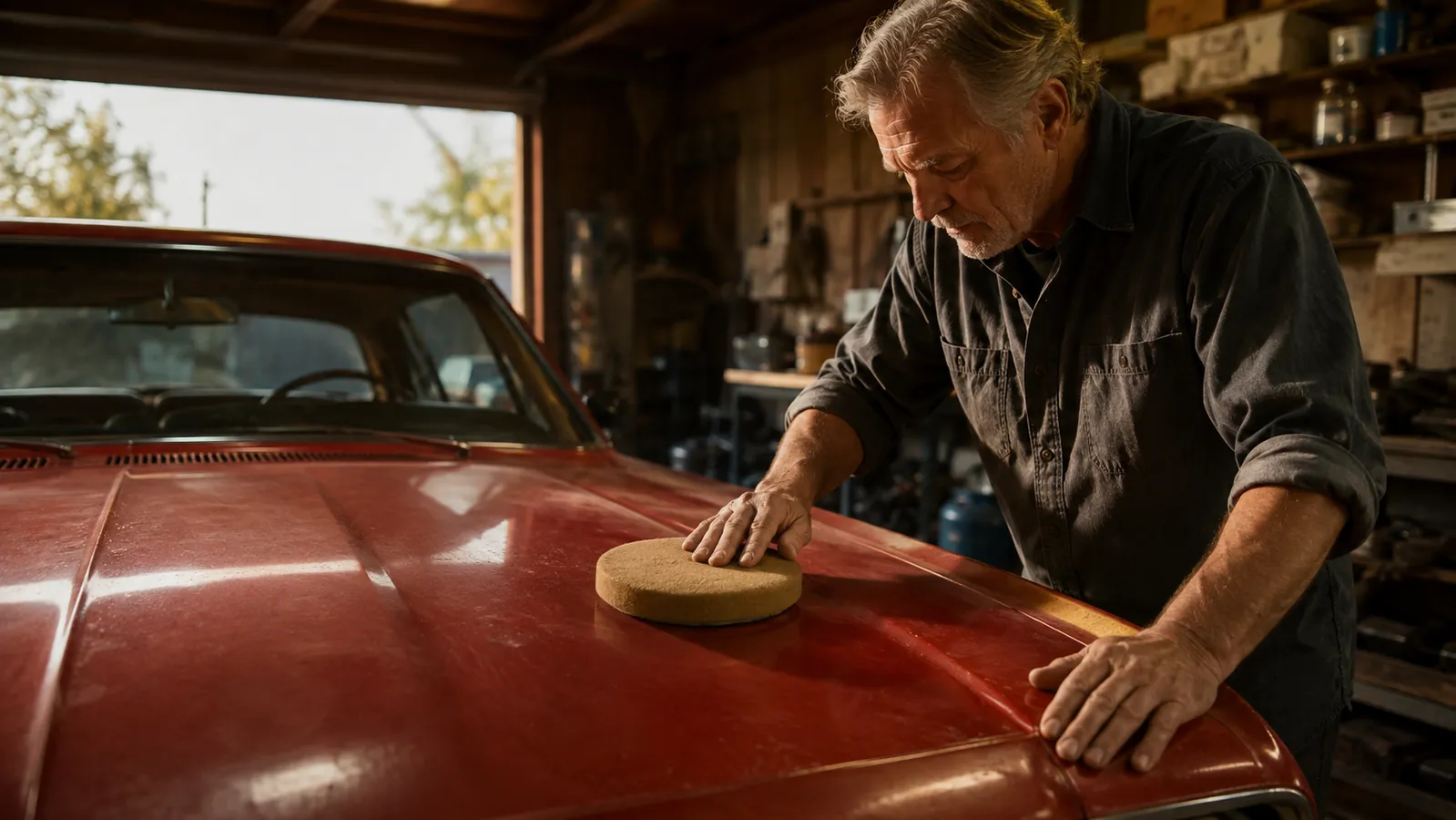
I will be straight with you. Meguiar's Ultimate Compound has over ten thousand reviews and a 4.4 average, and most of them read like they were written by people who watched a chalky hood go wet in one afternoon. That part is real. I have done that exact thing on three different cars in my own garage. But nobody in those reviews tells you about the dust, or the flash time, or the way it can make a single-stage panel look worse if you lean on it wrong. That is what this article is about.
Quick note on who is talking. I am Ray Bob Sullivan, Bob to everyone who has ever handed me a wrench. I have been restoring old Detroit iron in a one-bay garage for the better part of thirty years, everything from a '66 F-series with more bondo than steel to a Thunderbird that has sat in the same spot since before I owned it. I do my own paint and body, and I have two bulldogs, Brutus and Dottie, who supervise every panel I touch. The reader who is going to get something out of this is not a professional detailer. It is the person standing in their driveway with a faded car and a question about whether the paint is worth saving. I have been that person more times than I can count.
The Quick Verdict
A dependable light compound that knocks faded single-stage and clear-coat haze down to a shine if you respect its flash time. It is not the heavy cutter the Pro-Grade name promises, and it will not touch deep scratches.
Amazon Check Today's Price →If your paint is faded but not gone, this is the first bottle I would grab
Ultimate Compound will not repair a dent or resurrect paint that has already let go. But for the chalky, oxidized hood that just needs the dead layer cut off, it is the least expensive thing in the garage that actually works. See what it costs today.
Amazon Check Today's Price on Amazon →How I've Used It
I have had a bottle on the shelf since the summer of 2023, and it has done duty on three jobs. First was the '66 F-series hood, a single-stage red that had gone pink on top where the sun sat on it for forty years. Second was the Thunderbird, a repaint from the '80s with clear coat that had hazed over. Third was the roof of a '78 coupe I bought cheap because the paint looked like a dry lake bed. Same routine every time: wash, clay if the paint feels rough, then the compound on a foam pad, a small section at a time.
That last car is worth explaining. The roof was not just faded. It was oxidized deep, the kind of dead paint that comes off on a white towel and makes you wonder if you are making it better or just moving the damage around. Ultimate Compound brought it back to a color you could actually call green again, which surprised me. I did not think it had that much in it. It has limits, and we will get to those, but the first honest thing to say is that on paint that is faded but still alive, this stuff does what the label claims.
The bulldogs have opinions too. Dottie stands on the driver's seat and watches me work the pad like she is grading it, and Brutus just sleeps through it. The garage smells like a solvent and a half after a session, so I keep the door up and run a fan. If you have ever cut paint indoors without a fan, you already know why I mention it.
You would think cutting paint would have nothing to do with airplanes, but it does. I hang around enough hangars to know that prep is the whole job, and nobody skips the part that holds the wings on. Faded paint is the same animal. The panel, the pad, the compound, the patience: get the sequence right and the result follows. Get it wrong, and you are sanding out your own mistake on a Sunday afternoon.
The Dust Is Real, and It Gets Everywhere
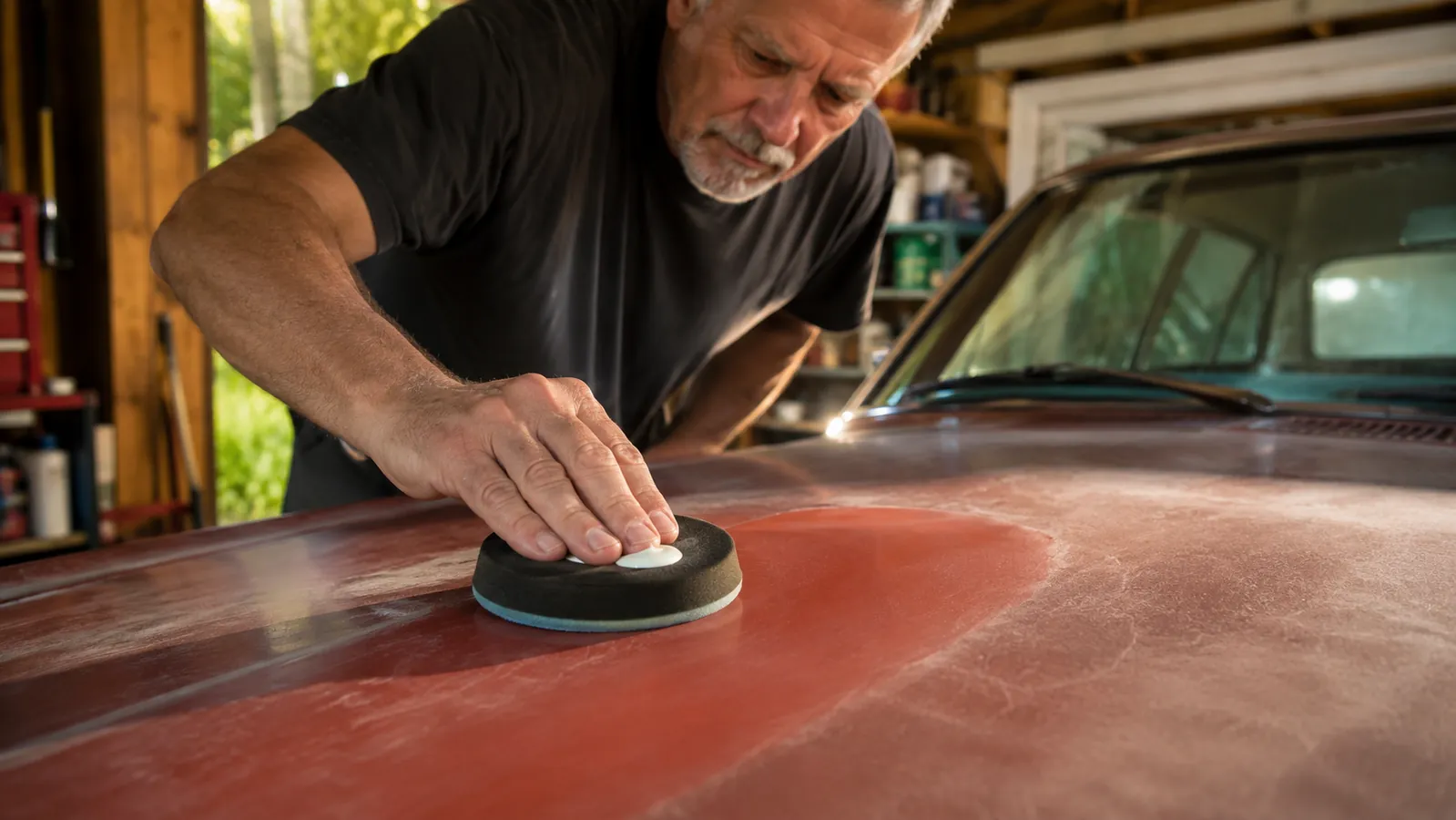
Here is the first thing the reviews do not warn you about. When Ultimate Compound flashes off, it dries to a fine white powder that does not politely stay on the panel. It gets into the cowl vents, under the wiper arms, into every emblem and trim screw, and down into the door jambs where you will be cleaning it out with a detail brush a week from Tuesday. I have found that dust in places I did not know my truck had.
This is not a defect in the product. Every diminishing-abrasive compound does some of this, and that dust is actually the working material telling you it has done its job and can be wiped away. But the reviews never mention that you should tape off the vents and emblems before you start, or that you will still be wiping residue off glass and trim for the rest of the day. Plan for it.
The fix is boring: work a small section, wipe it before it fully dries into that powder, and keep a separate clean microfiber for the final buff. If you let it dust completely, you are just spreading dried abrasives around, which is how people create the very swirls they are trying to remove. That is the honest version nobody puts in a five-star review.
One more thing about the dust while I am on it. If you work near a fence, a parked car, or an open window, you will be hosing that powder off something that is not your project. I learned to park my truck a little further from the bench and to keep the garage door down to a foot so the breeze does not carry the dust into the other bay. It is the sort of detail you only figure out by making the mess once.
Flash Time Will Fight You on a Hot Day
The second thing nobody tells you is that this compound has a working time, and it is shorter than you want. It is a diminishing abrasive, which means the cut decreases as you work it, and that only works if you break it down before it dries. On a panel in direct sun, or on a summer afternoon in a garage without a breeze, it flashes off in under a minute and starts to drag.
When it drags, it gums up the pad, smears instead of cutting, and you will be tempted to add more product to fix it. Do not. More compound on a dry panel does not add cut, it adds a mess and burns your forearm. Work in the shade or in the morning, keep the section small, and stop the instant it starts to grab. I have ruined the first fifteen minutes of more than one Saturday doing exactly the wrong thing, and the product is not at fault. The clock is.
This is where a machine changes the game, and it is worth naming. By hand you are fighting time and your own arm. On a dual action polisher at a medium speed, the pad keeps the product moving and you can work a section the way the compound wants to be worked. The honest review is this: Ultimate Compound is good by hand, but it is genuinely better under a DA. That is not a reason to avoid it, just a reason to know what you are signing up for.
What It Cannot Fix, and the Paint That Is Too Far Gone
Now the part the listings skip. Ultimate Compound is a light to medium cutter. It is not a magic eraser for a key down the fender, it will not touch a scratch you can catch with a fingernail, and it is not going to fix sanding marks or etchings from bird droppings that have been sitting for decades. If you run your fingernail across the damage and it catches, this is not the product. No compound will fix that. That is a touch-up or a repaint, and no bottle changes it.
It also has a hard ceiling on paint that has already let go. I have a fender off a parts truck that is oxidized so deep the clear coat is gone in patches and the base is chalk. No amount of Ultimate Compound brings that back, because there is nothing left to cut down to. The compound only works on paint that still has structure underneath. If the color is gone, not faded but gone, you are doing bodywork, not detailing.
I want to be blunt here, because it is the whole point of an honest review. The worst outcome is not the compound failing. It is the compound working too well for a moment and convincing you the panel is fine when it is actually about to lose its clear coat. On a car that has already been repainted cheaply, you can cut through the clear and into the base coat faster than you think, and once that happens the panel is a repaint. Start in an inconspicuous spot and check your work as you go.
There is a cheap test for whether a panel is worth compounding, and it takes ten seconds. Wash the area, dry it, and run the back of your hand across the paint. If it feels like fine sandpaper, that is oxidation sitting on the surface, and Ultimate Compound will likely fix it. If the surface is smooth and the color is just gone, the damage is under the top layer, and no compound will reach it. That test has saved me a lot of wasted effort.
The Pro-Grade Name Oversells It, and That Is Fine
Here is something worth knowing. The bottle says Pro-Grade, and it is called Ultimate Compound, and neither name means what you think. This is an all-in-one product, a compound that also polishes and leaves a little protection behind. That is a feature, not a bug, for someone with one bottle on the shelf. But if you come to it expecting the cut of a dedicated professional compound, you will be underwhelmed.
Meguiar's makes a whole line of professional cutting compounds, and the M105 Ultra Cut is the one that gets talked about in the same sentence as Ultimate Compound. They are different tools. M105 is a heavy cutter meant for a machine and a skilled hand, and it will remove material that Ultimate Compound will not touch. But it also needs a follow-up polish, and it has none of the forgiveness of this bottle. For a guy in his own garage doing his own paint, the all-in-one is usually the right answer. I have both on my shelf, and I reach for Ultimate Compound far more often. If you want the full comparison, it is worth reading my Meguiar's Ultimate Compound vs M105 breakdown.
The honest way to read the label is this. Pro-Grade does not mean pro-only. It means it is the same chemistry the detail shops use, packaged for the guy on the driveway. That is exactly the product most of us want. It just is not the heavy cutter the word Ultimate implies, and you will be happier with it if you know that going in.
Single-Stage Paint: Where It Earns Its Keep and Where It Bites
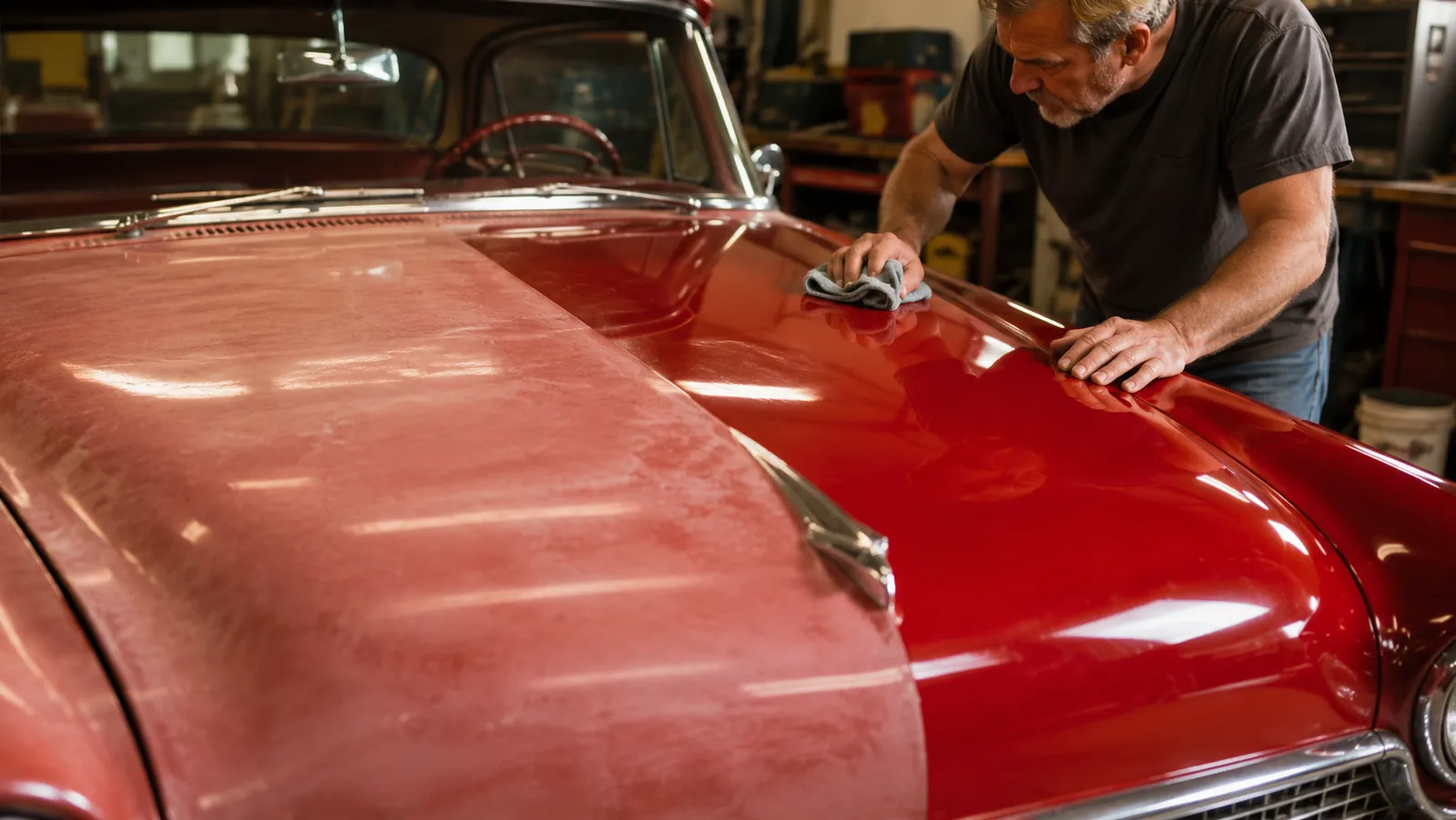
If you own a car painted before clear coat was common, this is the product's home turf. Single-stage paint does not peel off in sheets the way failing clear does, but it oxidizes on the surface, which is why a '66 that was red is now pink on top. Ultimate Compound is very good at cutting that oxidized layer off and leaving the color underneath. I have seen it take a hood from chalk to a shine you can check your face in, and it is genuinely satisfying to watch.
But here is the bite. Single-stage is thinner than you think, and the color layer is the same layer you are cutting. Lean on the pad too long in one spot, or compound a sharp edge, and you will burn through to primer in a heartbeat. I have a spot on an old fender where I got impatient and cut a thin line down to bare metal, and the primer stain is a permanent reminder that this product cuts paint. It cuts paint. That is the whole job. Respect it.
The rule I use now, learned the hard way: on single-stage, use a lighter hand than you think you need, keep the pad flat, and never spend more than a few passes on one spot before you wipe it and look. If the color is coming back, stop, you are done. The temptation to keep going and get it perfect is how the primer appears.
The hood is the worst panel on any single-stage car, and not because it is the biggest. It is the horizontal surface the sun hits hardest, so it fades first and deepest. The trunk lid is usually a close second, and the sides, protected by shade for most of the day, often look fine by comparison. That is why a single-stage car can look like it is two different colors depending on the angle you park it. If that is your car, the hood is the panel to test on, and the answer is usually yes, it comes back.
What I Liked
- Knocks faded single-stage oxidation down to a shine with just a foam pad and elbow grease
- All-in-one that cuts, polishes, and leaves light protection, so one bottle does the job
- Forgiving enough for a first-time hand application if you respect the flash time
- Cheap enough to be the first thing you try before you spend money on a respray
Where It Falls Short
- Dusts and flashes off fast, and the powder gets into every vent and emblem
- The Pro-Grade name oversells the cut; it will not touch deep scratches or sanding marks
- Can burn through thin single-stage or a cheap repaint's clear coat if you lean on it
- The small bottle goes quickly on a full-size hood
I got impatient and cut a thin line down to bare metal on an old fender, and the primer stain is a permanent reminder that this product cuts paint.
Who This Is For
Buy a bottle of Ultimate Compound if you have a faded single-stage hood or trunk, light clear-coat haze, or swirls from years of automatic car washes. If the paint underneath is alive and just needs the dead layer cut off, this is the cheapest restoration tool in the garage, and it does not require a machine to work. It is also the right first step before you spend real money on a respray. More than once I have talked a neighbor out of a paint job by handing him a foam pad and fifteen minutes with this bottle.
Who Should Skip It
Do not buy it if you need to fix a scratch you can feel with a fingernail, if your clear coat is already gone, or if your paint has let go and gone chalky all the way through. It also is not the product for a single-stage car that has been cut many times before, because the paint is already thin and you are more likely to burn through than bring it back. And if you want a true heavy cutter for a machine-only correction, you want a dedicated compound like M105, not this all-in-one. Know which job you have before you buy.
The honest bottom line: try the cheap bottle before the respray
Ultimate Compound will not save paint that is already gone, and it will test your patience with dust and flash time. But for faded paint that still has life under the surface, it is the first thing I reach for, and it is a fraction of the cost of a paint job. If you know the limits going in, you will not be disappointed.
Amazon Check Today's Price on Amazon →