
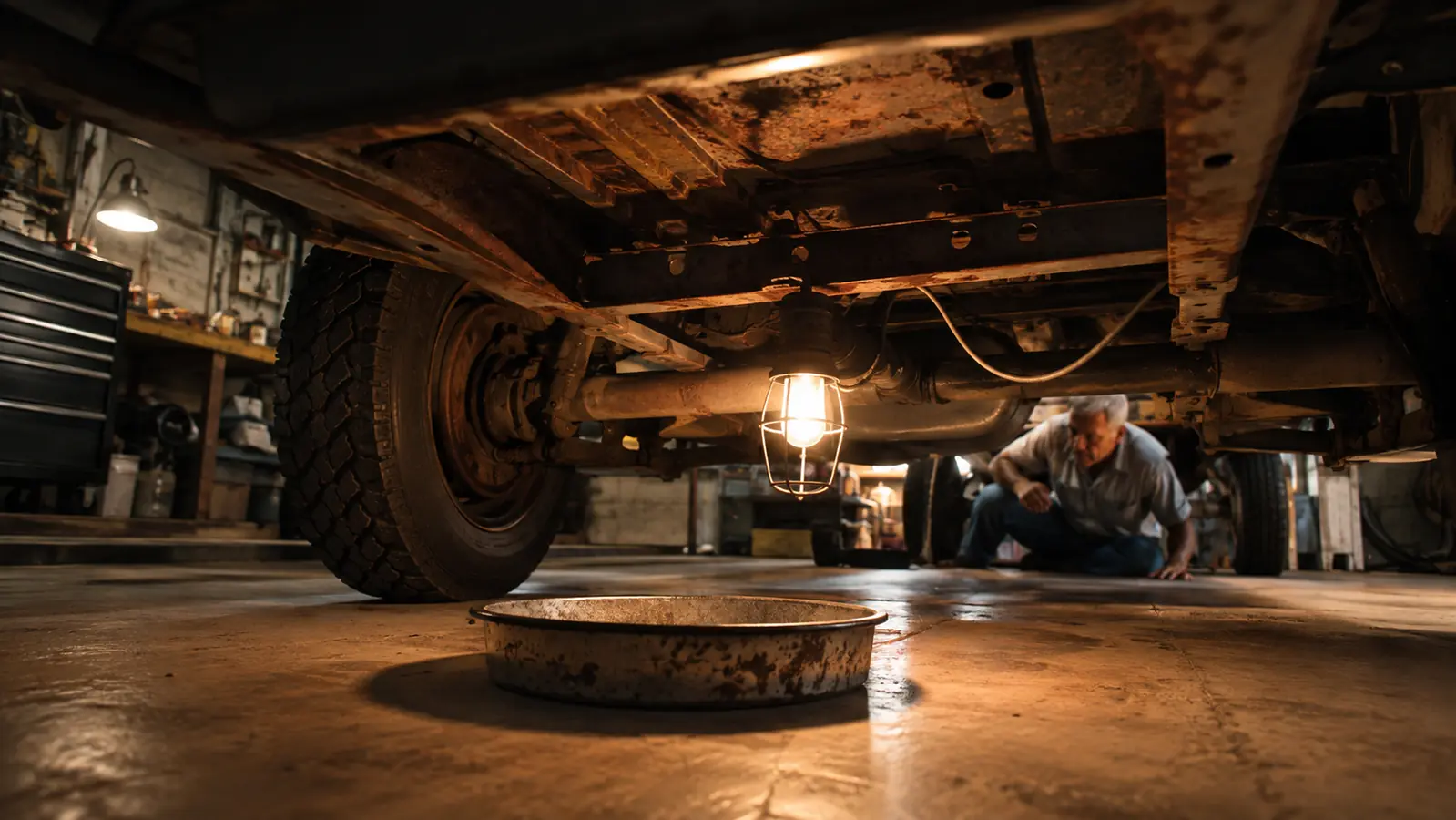
Last spring I slid under the F-100 with a drop light and found the passenger floor pan wearing a coat of brown I did not put there. Surface rust, front half of the pan, the kind that spreads out from under a rubber floor mat that held moisture for twenty years. My first thought was the one every classic car guy has: here it comes. Cut the floor out, weld in new steel, the truck sits on jack stands for a month, and the wallet takes a beating. That money-pit dread is real, and it is why most of us put off crawling under the car.
I had a hunch I might not need new steel, because I had a can of Rust-Oleum Rust Reformer on the shelf from a frame rail job a few months back. I have used Rust-Oleum's reformer enough to know what it does: it chemically converts iron oxide into a stable, paintable surface. But a product only works if the metal underneath is still solid, and I did not know yet whether mine was.
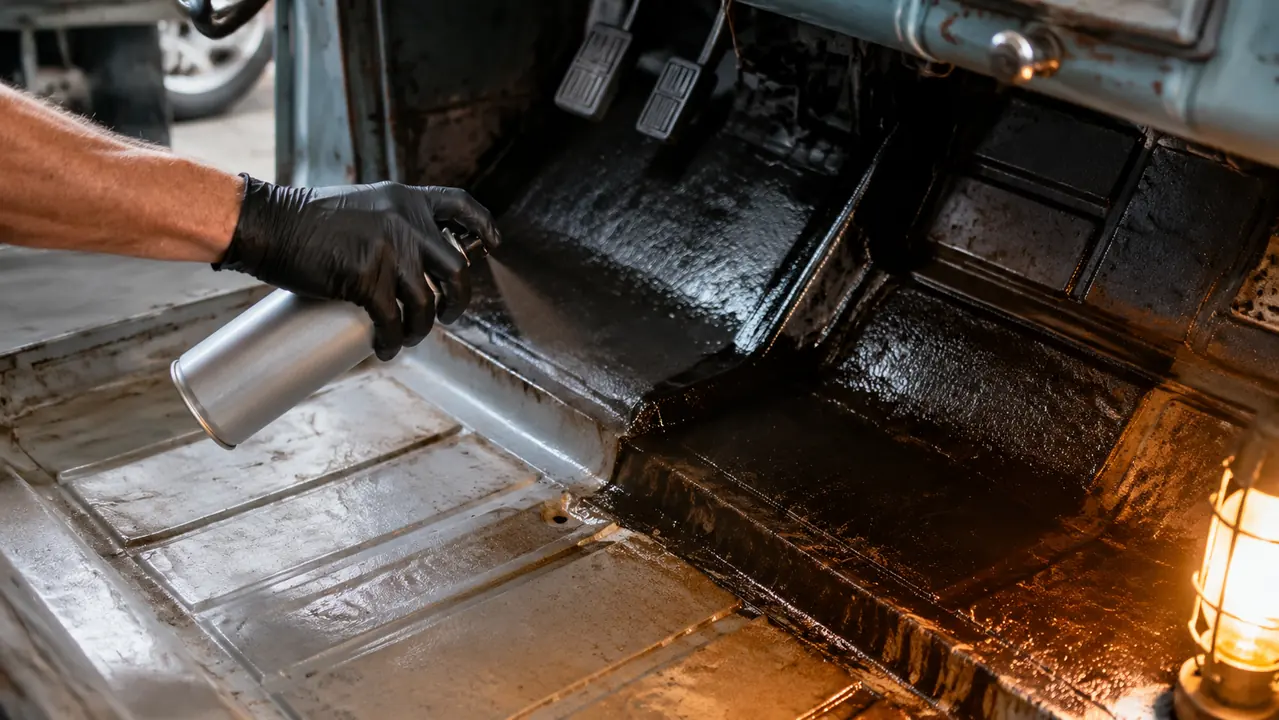
Before I ordered anything I grabbed a wire wheel on the drill and spent twenty minutes in the passenger footwell. What I was afraid was cancer turned out to be a skin. The rust was on the surface, up where the mat had trapped water, and under it the factory metal was still sound, still holding the thickness you can trust. That changes everything. When the metal is solid you are not repairing steel, you are stopping a process. Stopping a process is a smaller job.
That is the job a can of Rust-Oleum Rust Reformer is built for. It is a spray that chemically converts the iron oxide, the active rust you already have, into a stable coating you can paint over. It does not scrub rust off and it does not fill holes. It takes the rust that is still working and turns it inert, so the brown stops spreading while you seal it up. That is a real distinction worth understanding before you grab any old spray can.
The prep is the whole game, same as an airframe. I ran the wire wheel over every inch of rusted metal until the scale was gone, knocked the loose stuff off, wiped it down with degreaser, and let it dry completely. The can does not want to work on top of dirt or flaky scale. It wants clean rust it can bite into.
I sprayed the pan in a couple of even coats and watched it flash over to a dry, dark finish. The comfort tip lets you spray from awkward angles, which matters when you are lying on your back with the can upside down in a footwell. When it dried I went over it with a rust-preventive topcoat and called it a day. Brutus, my bigger bulldog, supervised the whole operation from the garage floor and did not offer a single useful opinion.
What I was afraid was cancer turned out to be a skin. When the metal is solid you are not repairing steel, you are stopping a process.
The Floor Pan Test Costs One Afternoon
Before you price replacement steel, grab a wire wheel and find out how bad it really is. If the metal is solid, a can of Rust-Oleum Rust Reformer at today's price is the cheapest insurance you can buy.
Amazon Check Today's Price on Amazon →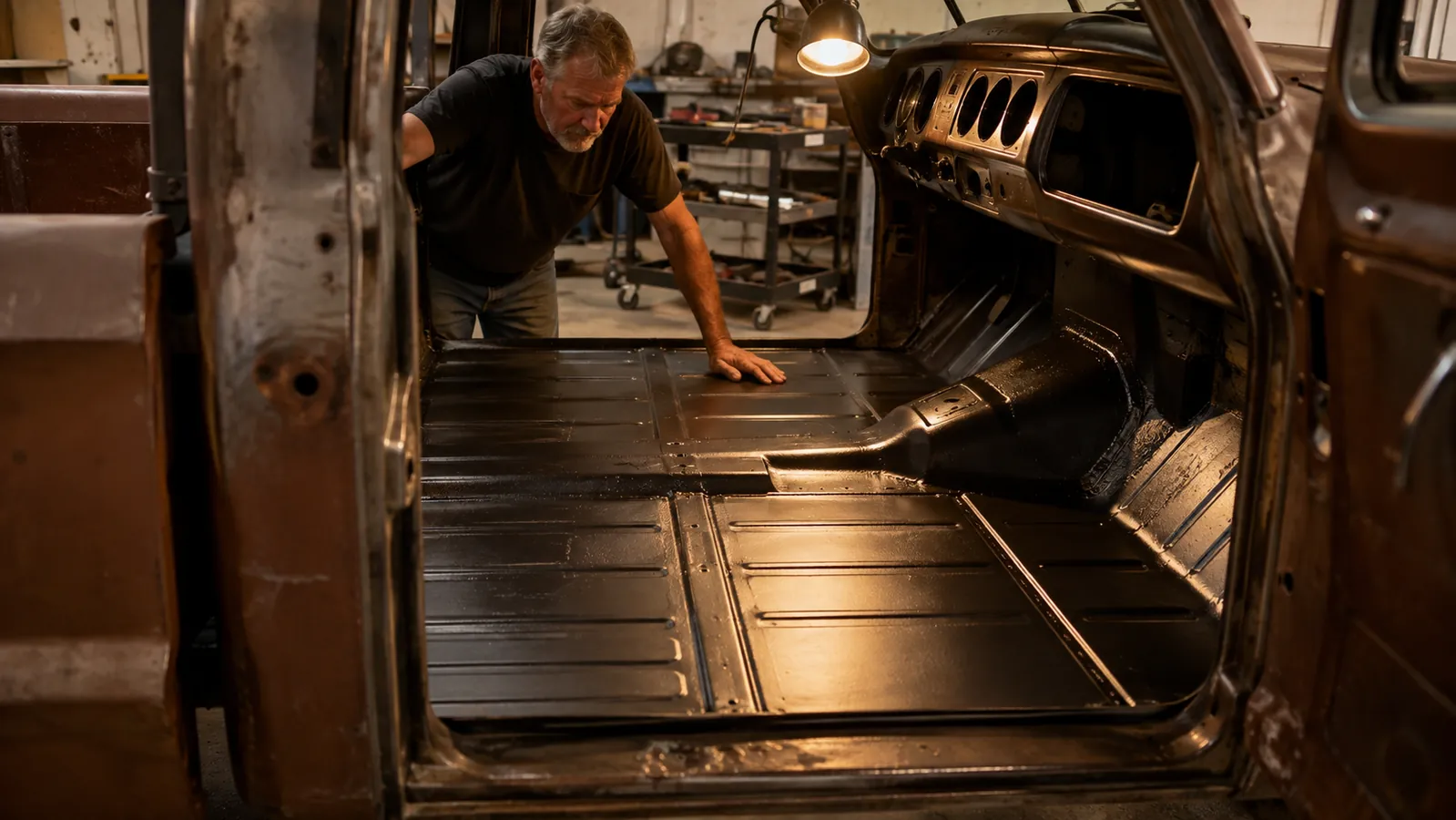
Two years on, I have been under that truck every spring, and the floor pans are still clean. No new brown creeping back at the edges, just the coating I put on doing its job. I have used the same can since on an inner fender, a frame rail, and a tool chest that sat in a damp shed, and the result has been the same every time. Clean, bare or light-rust metal that stays that way once it is sealed.
Now the honest part, because every product has a line. Rust Reformer is not magic. It will not bring back metal that has already flaked through, and it is the wrong tool for thick scale you can chip off with a screwdriver. If a wire wheel falls through the floor, you have a hole, and no spray fixes a hole. It is for early surface rust, the stuff most of us find when we finally look. Catch it at that stage and it does what it says. Let it go and it will eat the pan no matter what brand you bought.
The aviation crowd has a saying: there is no such thing as a small part of an airplane. The part that holds the structure is not the glamorous one. It is the same with a floor pan. Nobody shows off clean floor pans at a car show, but a car with solid floors is a car you can trust on a long drive, and a car with a rotted pan is a parts car no matter how shiny the paint is. The unglamorous work is the whole job.
And fixing the moisture source is the step people skip. If the mat still holds water, if the garage gets damp, the reformer is buying you time but it is not the cure. The coating seals the metal. Stopping the water before it gets there is the real job.
What I'd Tell You If We Were Sitting at My Kitchen Table
If you were sitting at my kitchen table with a cup of coffee and you told me you found rust on your floor pans, here is what I would say. Get a wire wheel and find out how bad it really is before you order a single part. Half the panic is not knowing. If the metal is solid, clean it down, let it dry, and hit it with a rust reformer, then seal it with a topcoat and fix whatever caused the moisture in the first place. That last part is the one people skip, and it is the whole ballgame. The can is a tool that buys you time to fix the cause, not a cure that lets you ignore it. The longer version lives in my Rust-Oleum Rust Reformer review, and there is a list of reasons it earns its keep worth reading before you spend a dime on a welder.
Start With the Wire Wheel, Not the Welder
A can of Rust-Oleum Rust Reformer at today's price is the cheapest way to find out whether your floor pans are savable. Spend an afternoon knowing instead of a month guessing.
Amazon Check Today's Price on Amazon →