
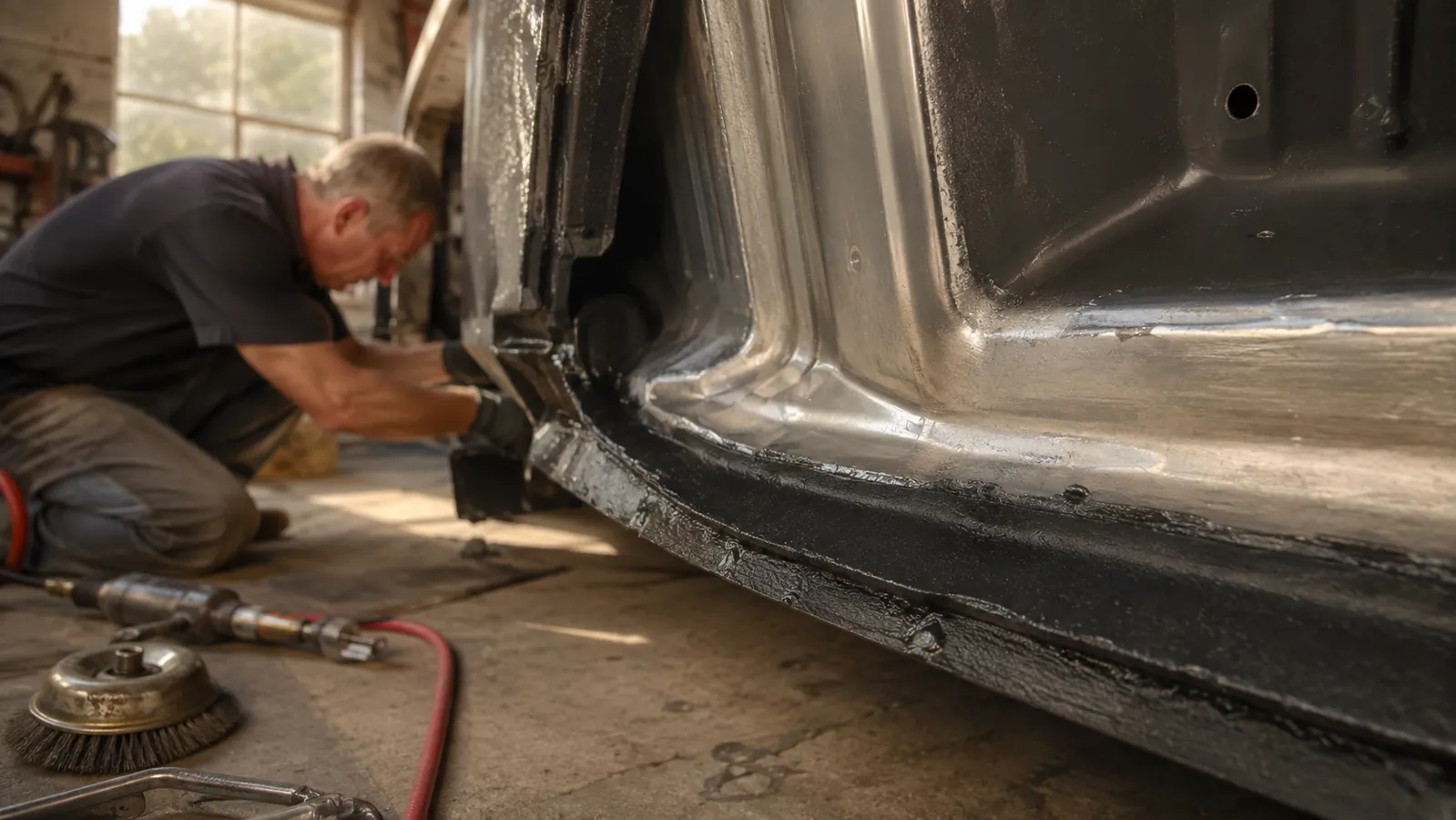
I have gone through more cans of Rust-Oleum Stops Rust Reformer than I care to count, and I keep coming back to it, which is the honest part and the frustrated part all at once. It is the spray can everyone reaches for when a fender lip shows that first orange freckle, and it has built a reputation on a half-truth. It converts rust. It does not remove it. That one sentence is the whole review, and the rest of this is just me explaining the distance between the two.
The can is not wrong. It really does take live surface rust and turn it into a flat black coating that you can paint over, and on the right metal it earns its keep every single time. But I have watched it embarrass a lot of guys who skipped the wire wheel, and I have peeled reformer off metal that was never honest about how scaly it was to begin with. Let me give you the version you do not get off the label, the way I would across the driveway.
The Quick Verdict
A genuinely good chemical conversion coat for light surface rust, and a flat-out lie if you expect it to fix thick scale or a hole. Great as a prep layer, never a finish.
Amazon Check Today's Price →Done pretending rust is a mystery?
Work the wire wheel first, then let the converter do its chemistry. A can of Rust-Oleum Stops Rust Reformer is the cheapest insurance you will buy against the rust coming back through your paint.
Amazon Check Today's Price on Amazon →How I've Used It
I've sprayed reformer on inner fenders, frame rails, floor pan edges, door bottoms, and one Thunderbird trunk floor that looked like a topo map of a bad weekend. My own rides tend to be the everyday iron people drove before it was collectible, a '60-ish F-series and a six-cylinder coupe, so I am not dealing with trailer queens. I am dealing with thirty and forty year old metal that got parked in a damp shed and forgotten. That is exactly what rust reformer is built for.
The method that works for me is plain: knock the loose scale off with a wire wheel or a stiff bristle disc, let the metal dry completely, spray a light tack coat, then a second pass a few minutes later. The stuff needs bare-ish rust to bite into, and it needs that rust to be dry. I have sprayed it on a foggy morning after a wash and watched it streak, which is not a failure of the product, it is a failure of my patience.
Ninety percent of the bad outcomes people blame on Rust-Oleum's reformer are really a prep problem hiding behind a product review. Get the oil off, get the scale down, get the moisture out, and this stuff does its job about as well as any spray can chemistry can.
The Part Nobody Puts on the Can: It Converts, It Doesn't Remove
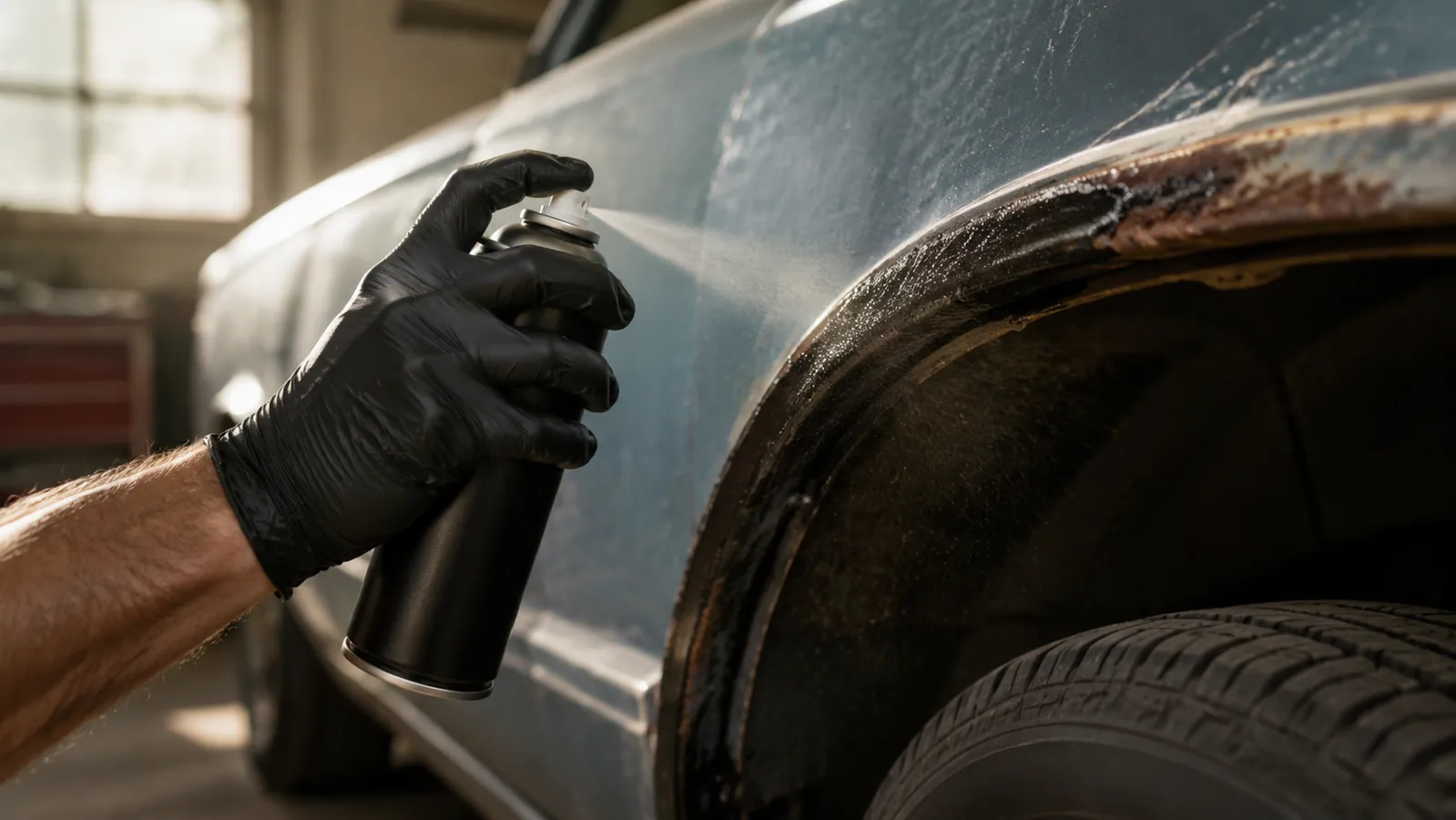
Here is the whole misunderstanding in one line. Rust reformer works by a chemical reaction that changes red iron oxide into a black tannate compound, a stable coating that stops the rust from spreading and gives primer something toothy to grip. The rust is still there. It is just dead, and it is black, and it is paintable. That is the trick. If you expected the rust to disappear, you came to the wrong can.
That matters more than people think, because it sets the ceiling on what the product can do. Light surface rust, the kind that wipes off on your fingers, it converts beautifully and leaves a nice flat black tooth for paint. But the moment you have flaky scale, the kind that peels off in chunks and leaves pitting underneath, the reformer cannot reach down into all of it. It coats the surface it can touch, and the scale underneath keeps working like nothing happened.
I had a buddy swear up and down that reformer was a rip-off because a spot he sprayed came back orange inside a year. When I finally looked at it, he had sprayed it over a door bottom that was scaling so bad you could peel it with your fingernail. The reformer never touched the rust because the rust was underneath a shell of its own loose skin. He did not need a different product. He needed a wire wheel and an hour of his time.
A reformer is not a miracle. It is a chemical handshake with the rust you can actually reach, and no handshake fixes a hole.
The guys who fail with this stuff are the ones who spray it over rust they never ground down. They get a black coating that looks like it worked, then a year later the orange comes back through, and they swear the can is junk. The can is not junk. The metal was never ready. Reformer is a treatment, not a spell, and no amount of spraying over a mess fixes a mess you did not clean first.
Where It Wears Thin
Let me be straight about the limits, because this is the honest review and the label will not tell you any of it. First, reformer is flat black and it is not UV stable for the long haul. If you spray it on a frame rail that never sees sun, it can sit there for years. But if you put it on a horizontal panel that bakes in the light, it will fade and chalk on you, so it is a prep coat, not a finish. Plan to topcoat it, especially anywhere the sun finds it.
Second, it hates oil and grease even more than it hates scale. A rusty frame rail that somebody slathered in fluid film is a disaster for reformer. The chemistry cannot bite through a film of oil, so you get fisheye and a coating that peels off in sheets. Degrease the metal first. Wipe it down with brake clean or a solvent, let it flash, then spray. That single step saves more cans than any other.
Third, coverage is more modest than you expect. A 12 ounce can does not go as far as the enthusiasm on the label suggests, because you want two passes and the product is a bit thin. On a whole floor pan I will usually budget two cans before I start, and I have gone through three on a big panel. It is cheap enough that this is an annoyance, not a dealbreaker, but it is annoying to run dry mid-job with a tack coat half laid.
And the honest one that nobody wants to hear: if the rust has already eaten through, reformer is not your answer. It will happily convert the edges of a hole and give you a great base to patch, but it will not fill the hole or stop you having to cut and weld. Treat it as a tool that buys you some time and prepares the metal for the real fix, not a rust repair in a can.
Reformer vs the Liquid Converter, and Why I Reach for Both
If you are shopping rust treatments, you will run into the eternal disagreement between reformer in a can and the liquid converter that gets brushed on. They are not the same animal, and choosing between them comes down to what the metal looks like when you start. Reformer is a spray-on coating, fast and clean, ideal for a frame rail or a floor pan once you have already ground the worst of it off. A liquid converter is thinner and creeps into more nooks, which earns its place on spotty, hard-to-reach rust that you cannot comfortably crouch under to spray.
I keep both on the shelf, and I have a full comparison of Rust-Oleum Reformer against the liquid favorite, Ospho, for the reader who wants the honest head to head. The short version, though, is that I reach for the spray can first because it is faster and lays down that nice flat base in half the passes. The liquid comes out when I am chasing rust up inside a cab corner or a closed box section where the can cannot get a clean shot. Knowing which one you are facing is half the job.
And if you want the longer view on this particular can, my two-year review of the reformer walks through how it holds up on metal I treated early and left to sit. The honest conclusion has not changed: on properly prepped surface rust it is one of the most dependable tools in the garage, and it is cheap enough that I stop thinking about cost the second I start spraying.
What I Liked
- Genuinely converts light surface rust and stops it spreading
- Leaves a flat black toothy surface that primer and paint grab well
- Cheap, fast, and foolproof on properly prepped metal
- Fine as a long-term base coat on frame rails and inner fenders that stay out of the sun
Where It Falls Short
- Converts rust, it does not remove it, and it cannot reach under thick scale
- Flat black and not UV stable, so it is a prep layer, never a finish
- Hates oil, grease, and damp metal, and will streak or peel if they are present
- Coverage is modest, so a big panel eats a couple of cans
- Useless on rust that has already perforated the metal
The Smell, the Mess, and the Little Niceties
Since this is the review nobody asked for but everybody needs, let me talk about the part that is not chemistry at all. It smells. It is a solvent-heavy spray paint, and it will tell you the whole garage about it, so crack the door and give yourself some air. The comfort tip that lets you spray from any angle is a real convenience under a car, where you are often upside down and reaching, and I have learned to point the nozzle before I press so I do not paint my own cuff.
It dries reasonably fast, which I like, because a tack coat is dry enough for a second pass in a few minutes and the whole surface is workable before the coffee goes cold. But fast drying is a double-edged sword. It means you have to keep the can moving and keep the coats light, because a heavy wet coat can dry into a blush or run before you can smooth it. Thin, even, and let it work. That is the whole trick. Give the can a good minute of shaking before you start too, because the solids like to settle and a lazy shake leaves you a thin, patchy first pass.
The Right Way, the One That Works
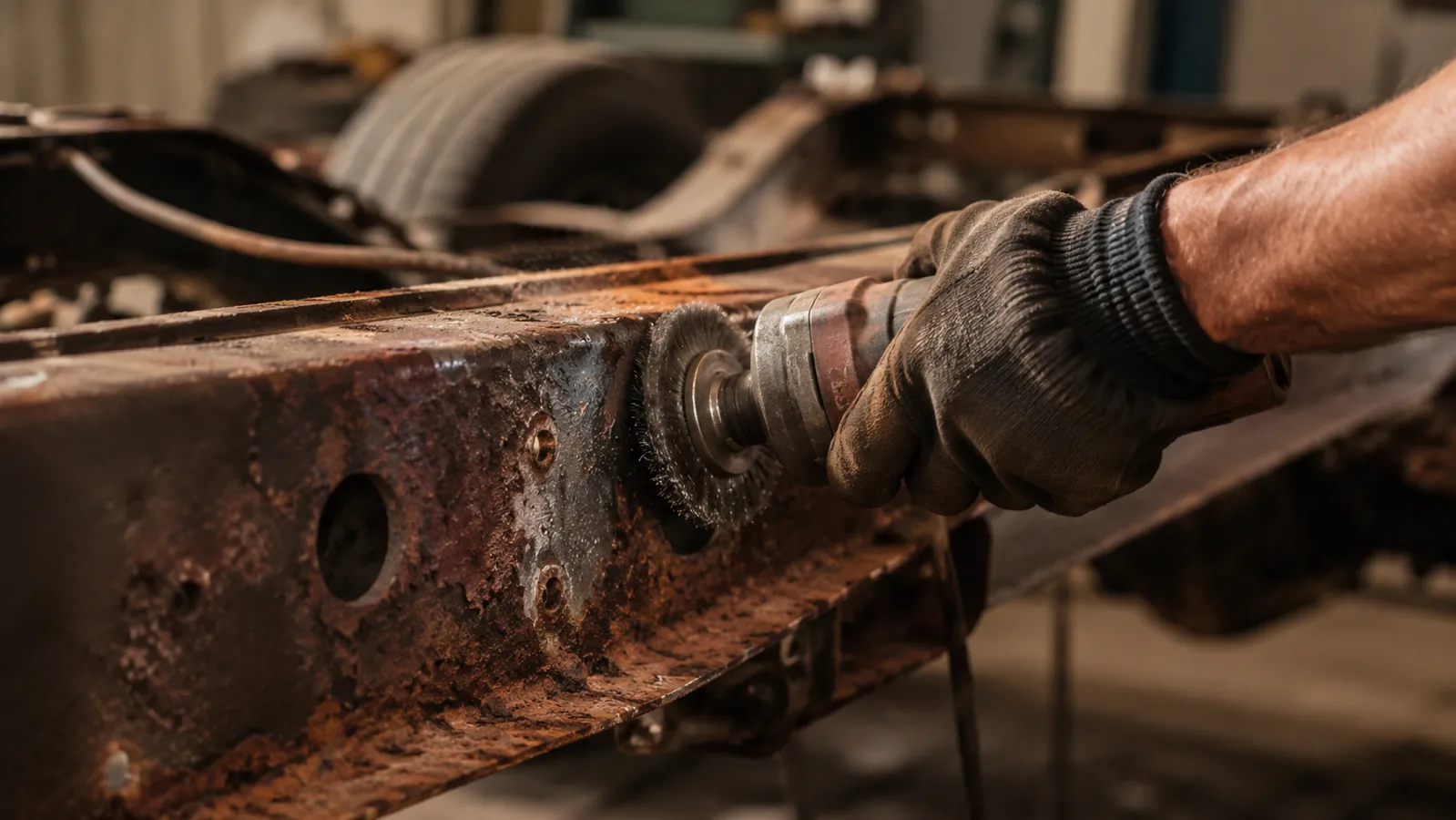
Because I have made every mistake there is to make with this can, let me hand you the version that actually holds up. Wire-wheel the rust until the red goes bare and the flakes stop coming off. This is the part my two bulldogs, Brutus and Dottie, have watched me do a hundred times, both of them unimpressed and lying on the cool concrete while the dust hangs in the air. It is slow, it is gritty, but it is the whole ballgame. Rust reformer is only as good as the metal you hand it.
Then wipe it down to get the dust and any oil off, let it dry, and spray a light first coat. Give it a few minutes, then a second pass. What you want is an even flat black, not a thick wet glop, because too thick and it dries slow and can blush. Let it cure before you paint over it, and you will have a base that primer is happy to live on for as long as the car is yours.
It preaches the same sermon as the hangar talk I grew up hearing around airplanes: prep is everything, and you do not skimp on the part that holds things together. A rusty frame rail is that part. Do the work on the front end and the reformer will behave. Skip it and you are just painting a lie over a lie.
The Rust That Comes Back Anyway
I do not want to leave you with the idea that a properly done reformer job means rust is gone forever, because it does not. What it does is put the rust you can reach to bed and give you a clean base to seal. The long game is a good topcoat, keeping the car out of the damp, and touching up the inevitable stone chip before it becomes a rust spot again. Reformer is a strong player in that game, not the whole team. I have had panels I treated five years back that still look as good as the day the black went down, and I have had others where I learned the hard way that I had not ground far enough. The difference was never the can. It was how honest I was about the metal before I touched it.
Seen that way, it is one of the best values in the garage. It is cheap, it is simple, and it buys you a clean base where you would otherwise have to grind all the way to bare metal or cut the panel out. That is not hype. That is just counting the hours against the cost of the can, and the can wins every time on the metal that is worth keeping. A wire wheel and a can of reformer will get you farther on a rusty project than a stack of expensive coatings ever will, because they fix the cause instead of just covering the symptom. And that is the honest recommendation in one line: know exactly what it is for, and it does exactly that.
Who This Is For
This is for the garage restorer working on metal that is rusty but still sound, the frame rails, inner fenders, floor pan edges, and brackets that carry the boring structural load of an old car. It is the perfect companion for someone like me, who has a dozen small rusty spots scattered across three vehicles and does not have the money or the patience to media blast every one of them down to bare steel. If you are putting a classic back together and you want to put that surface rust to bed cheaply before you prime and paint, reformer is the correct tool. It is also the right call for a quick patch job on a daily where you just want to stop the spread until you can do it properly.
Who Should Skip It
Skip it if you have thick flaky scale all over the panel, because reformer will not reach the rust underneath and you will be doing the job twice. Skip it if the rust has already perforated the metal, because you need to cut and weld, not spray. And skip it if you expected a finish you can leave bare out in the weather, because the flat black will fade and chalk and make you wish you had topcoated it. Those are not failures of the can. They are the jobs it was never meant to do, and once you accept that, the can becomes a lot more useful and a lot less of a disappointment.
Betting on a rusty frame rail?
Wire-wheel it, degrease it, and let Stops Rust Reformer convert what is left before you ever lay down primer. Today's price on a can is the cheapest part of the job.
Amazon Check Today's Price on Amazon →