
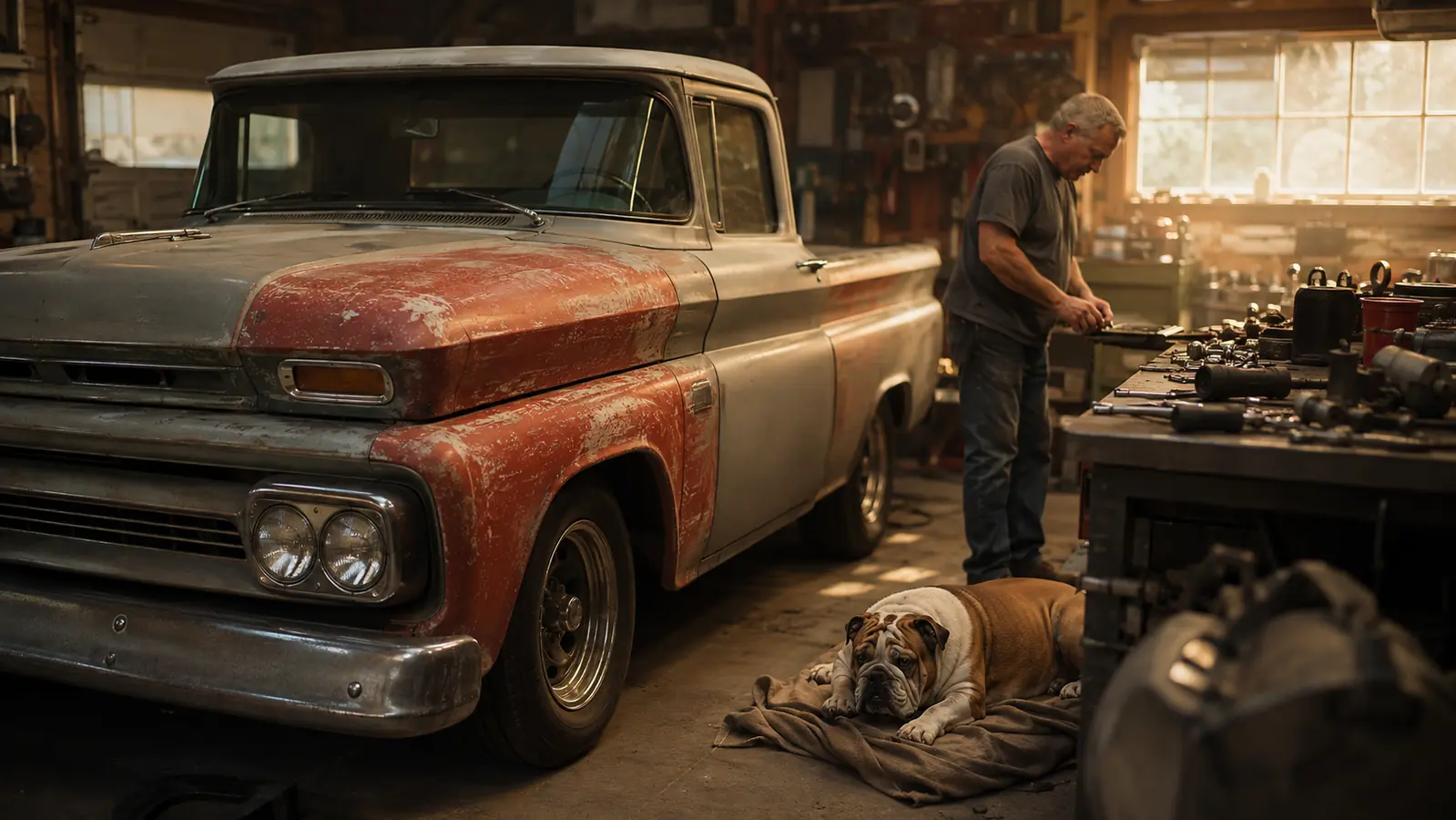
That fender had been dead for years before I got around to it. The red had gone chalky, the color looked gone under the work light, and every person who walked past the car said the same thing: that paint's shot, time for a respray. I kept telling them no. You don't respray a '67 F-100 over one fender.
The paint wasn't gone, it was oxidized. Old single-stage red that had spent four decades in the sun. Single-stage paint is just color with no clear coat over it, so the sun gets straight at the pigment and kills the top layer, leaving that white, dusty film you can write your name in. The color is still there underneath, but you have to cut through the dead layer to find it. I knew that because I'd done it by hand once on a trunk lid and it worked. It just took forever. It was the kind of job I would eventually hand to a machine, an AVID POWER dual action, but I had not crossed that line yet.
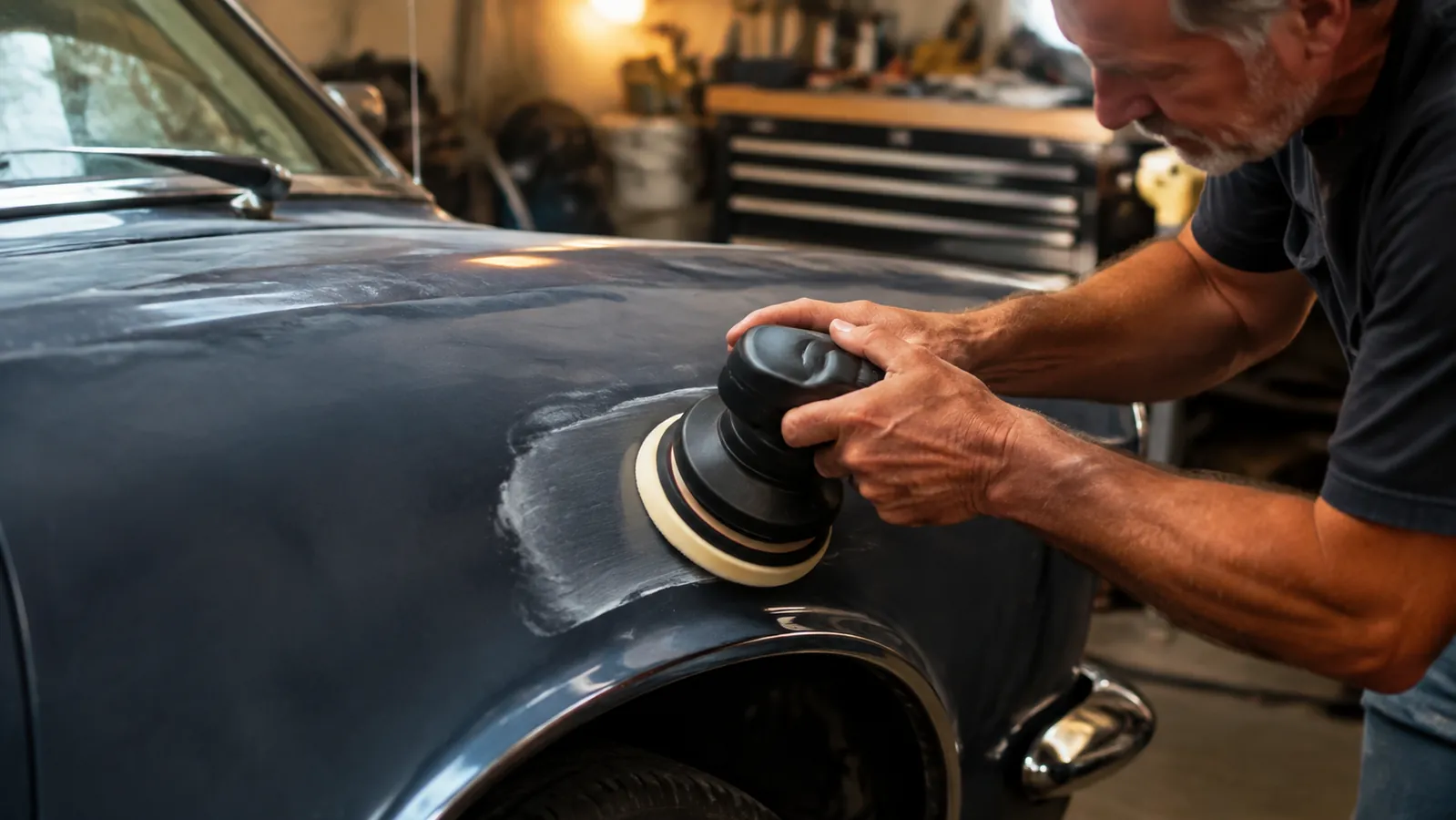
So I did the sensible thing and started rubbing. Compound on a foam pad, small circles, one section at a time. I'd get home, eat, and go out to the garage and work on that fender for an hour every night. After two weeks my right shoulder was complaining and the fender still looked like a bad compromise. Better than it had been, sure, but the fade was still there and I'd only really finished the front third. At that pace I was looking at another month for the rest of the truck.
I was about to live with it when my buddy across the street, who does the paint work down at the airport, told me I was being an idiot. He's been turning wrenches and spraying longer than I have, and he's the one who first taught me that in a hangar you don't rush the prep, you do it slow so you don't do it twice. He handed me a dual action polisher and said it would do more in an afternoon than my arms had done in a month. I argued with him longer than I'd like to admit. I grew up doing this by hand, and part of me was convinced a machine would burn through the paint and leave me staring at primer.
He had an AVID POWER 6-inch dual action. A dual action polisher is different from the old rotary buffers, and that difference is why I finally agreed to try it. The pad orbits and spins at the same time, so it is always moving, which makes it very hard to lean on it hard enough to burn the paint. That's the part I didn't trust until I felt it. A rotary holds still in one spot, and that's how people burn through clear coat at car shows. A DA doesn't give you the chance.
Two hours with a foam pad on wheels did more than two weeks of hand polishing, and it never came close to burning through.
Let the Machine Do the Work Your Arms Shouldn't
A dual action polisher is the difference between hand-cutting one panel for a month and finishing it in an afternoon. See today's price on the AVID POWER 6-inch DA kit.
Amazon Check Today's Price on Amazon →I started on the same fender, speed 3, a cutting pad with a dollop of compound. The first pass is scary because the residue smears everything and you cannot see the paint underneath. You just trust the pattern and keep moving, overlapping every pass by half a pad. I wiped it off and the chalk was gone. Not faded less. Gone. The red came back like it had been hiding in there the whole time, which it had.
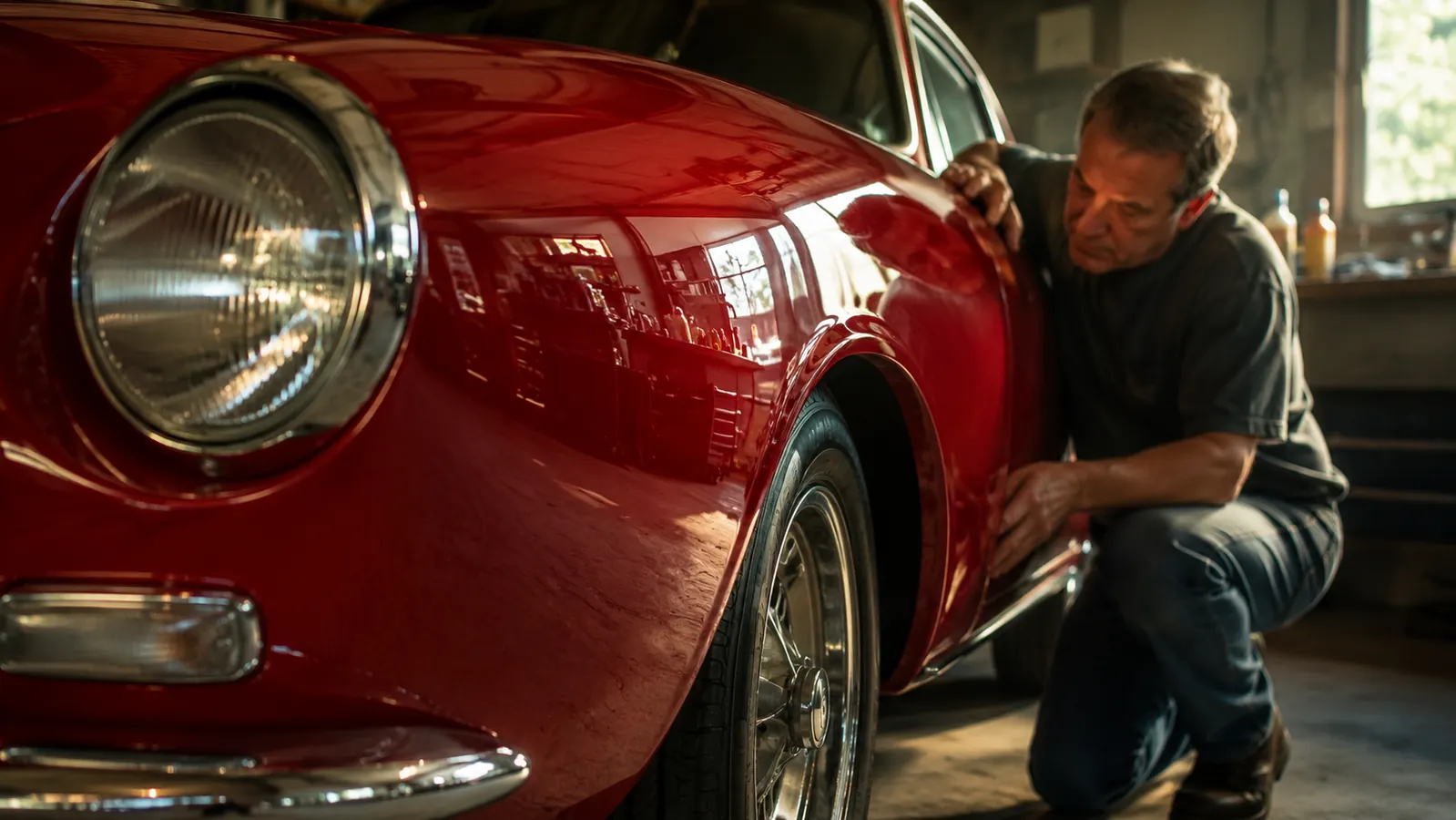
I finished the rest of the fender that same afternoon, working a two-foot section at a time, slow passes, letting the pad do the cutting and keeping the trigger light. By the time the light turned orange through the garage window I had a fender that matched the rest of the truck. Dottie watched the whole thing from her blanket, unimpressed, the way she watches everything I do. Brutus sniffed the pad once and went back to sleep. High praise, from him.
I followed the cut with a light polish pass and then a coat of wax, because cutting exposes fresh paint and fresh paint needs protection. That fender has held its color through a full season since, and the truck has looked like it belongs in the driveway instead of like it was parked there to die. I'm not going to tell you it's a showroom finish, it's a fifty-year-old panel, but it looks like a car somebody cares about.
Since then I've used the same AVID POWER on the coupe and on a buddy's Camaro, and I keep coming back to the lesson from the hangar: the work you do before the glamorous part decides how it comes out. Prep is nine tenths of any paint job, and the machine just lets you do the work without wrecking your shoulder.
What I'd Tell You If We Were Sitting at My Kitchen Table
Before you pay somebody to respray a faded panel, spend an afternoon trying to bring the paint back. Most of the time it isn't gone, it's buried under a layer of dead oxidation, and you can cut that layer off with a compound and a machine that costs a fraction of what a respray runs. You don't need anything fancy, no big rig, no ten-pad kit. A dual action polisher like the AVID POWER, a couple of pads, and one bottle of compound will carry you through a weekend of paint correction, and you'll reach for it every spring for polishing and waxing before you ever need to cut again. The hand work taught me how to feel paint. The machine taught me how to finish it.
If the Paint's Just Oxidized, Cut It Before You Spray It
You can't repaint a car for what this costs. If the color is still under the chalk, a dual action polisher will find it. Check today's price on the AVID POWER 6-inch kit.
Amazon Check Today's Price on Amazon →