
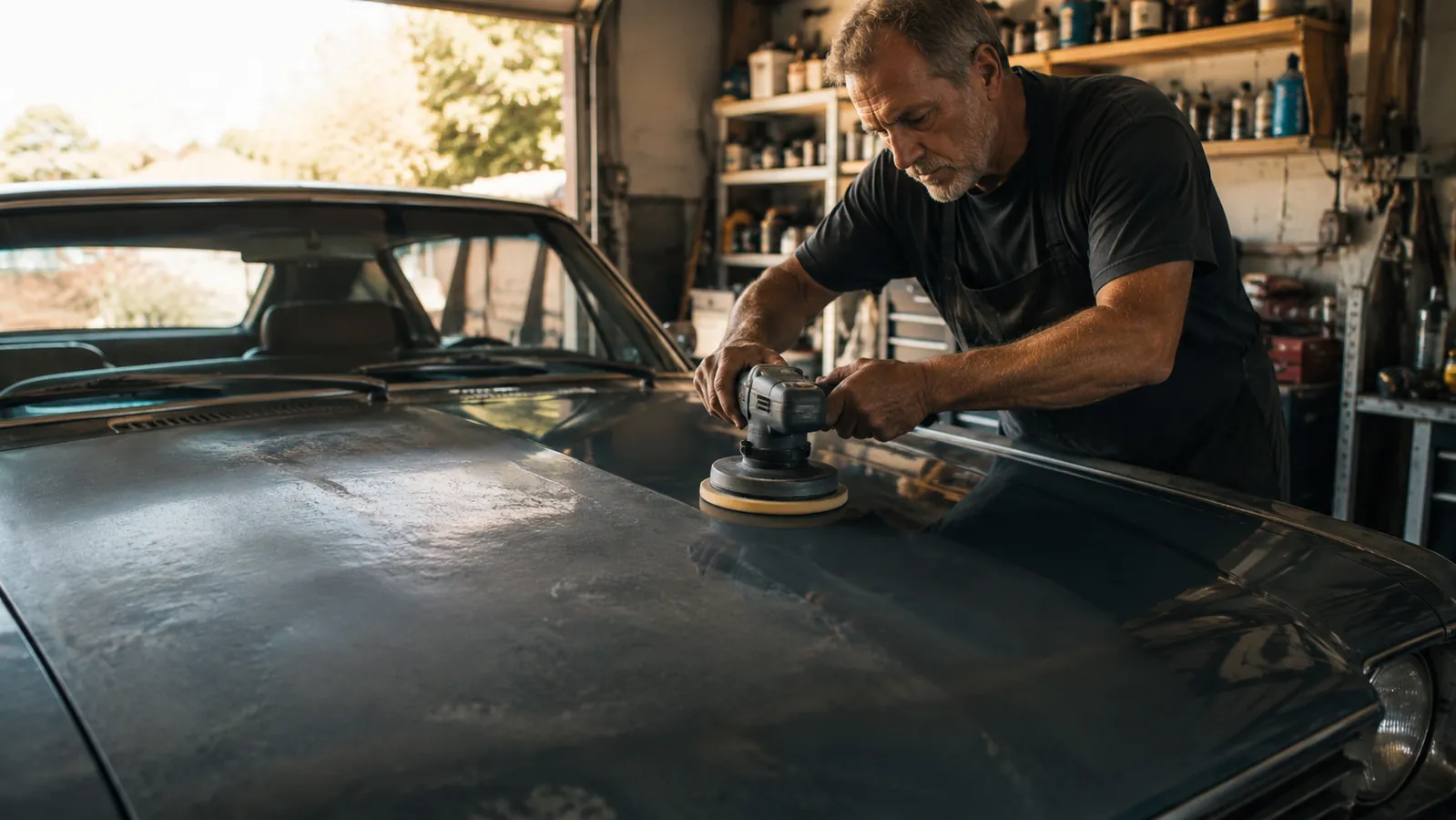
I'll say this up front: I bought the AVID POWER 6" dual action polisher fully expecting it to be a toy. Seven thousand Amazon reviews told me one thing about a budget polisher, and the guy who has been cutting paint by hand on a `66 F-series for the better part of twenty years told me another. I was ready to be disappointed. Instead I spent a full season leaning on it through several old cars, and I came away knowing exactly where the bargain ends and where it honestly does not matter that you saved the money.
The reviews you read praise it, and the reviews you read bury it, and both are right, because nobody bothers to say what kind of work they were doing. If you intend to lay into badly faded single-stage paint with a heavy cutting pad at full speed, you'll want to know what happens before you buy it. If you mostly want an upgrade on hand-polishing a grill shell or a touch-up quarter panel, you'll want to know the bargain part of the bargain. This is the version I wish somebody had written for me.
The Quick Verdict
A genuinely forgiving DA that will gladly spend its life on a classic's paint, provided you respect its limits, buy a couple of better pads, and work in sections instead of leaning on it like a rented floor buffer.
Amazon Check Today's Price →The budget polisher that will outlast your arm on a faded fender
If the honest breakdown below sounds like your kind of work, today's price on the AVID POWER DA is still one of the low-risk ways to get off hand-polishing for good.
Amazon Check Today's Price on Amazon →How I've Used It
I should be clear about the work, because it drove everything I'm going to tell you. Across one season I ran this thing on a faded `69 Mustang coupe that had been parked outside for years, a single-stage `62 Impala hood, the roof of my own `66 F-series, and a collection of chrome bumpers, wheel lips, and one stubborn Thunderbird deck lid. Chemical compounding, a light machine polish, and a few slow passes of wax. Nothing heroic, the same jobs a weekend restorer actually does, which is exactly the person this polisher was built for.
I keep a detailed log of everything I do to a car, out of habit, and it helped me track this honestly. The AVID POWER got used roughly twice a month for about six months, each session an hour or two, and it never once smoked, overheated, or quit. Brutus and Dottie, my two bulldogs, treat it as a piece of furniture now; they lie on the cardboard box it shipped in and watch me like I'm doing a magic act. That is more endurance than I can say for some of the 'professional' tools I've had in this shop.
The last point matters if you haven't spent time around one of these. A dual action polisher, unlike a rotary, moves an eccentric orbit, so it does not heat paint up the way a rotary will on a bad day. For a classic you cannot repaint cheaply, that forgiveness is the whole reason to reach for a DA in the first place. The AVID POWER is, at heart, that same forgiving animal, with a budget price tag stapled to it.
Where It Stalls Under Pressure
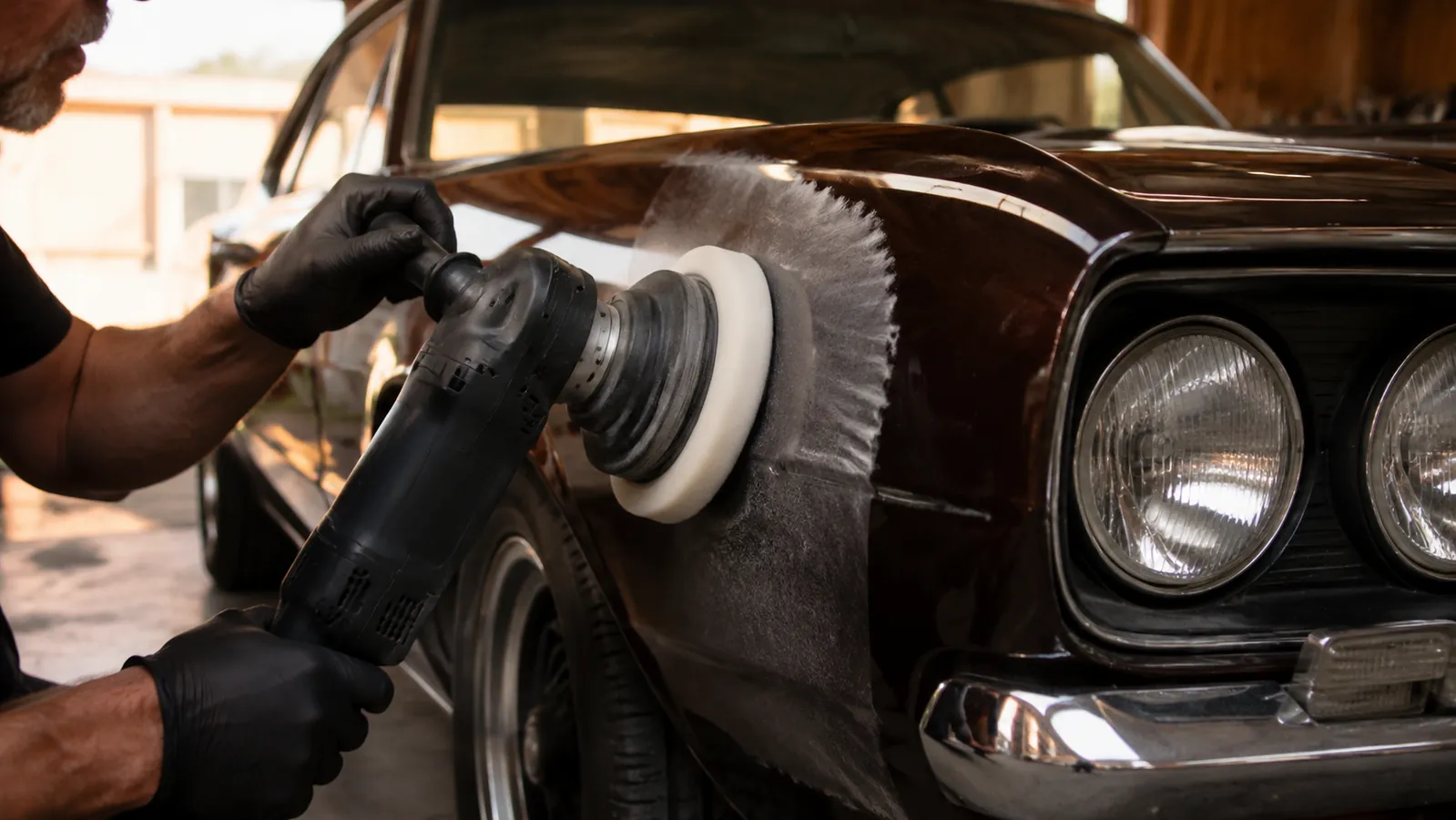
Here is the honest truth the reviews skate past. Lean on this thing, really lean, hard enough to feel it bite into cutting compound, and it will stall. The motor has a torque limit and it will not be argued with. When you apply real downward pressure on a stubborn section of wonky paint, the pad stops spinning dead against the panel and you have a very expensive-feeling paperweight vibrating your hand for a second.
The fix is not a mystery, and it is not a defect in the sense the reviews mean. Every consumer DA I've used, from this one up to machines at twice the price, stalls if you press hard enough. The difference is that the more expensive units let you get away with heavier pressure and still keep the pad rotating. The AVID POWER tolerates light to moderate pressure beautifully, and then it simply tells you to slow down. Learn to let the tool work, keep the pad flat, and let the compound do the cutting, which is the correct technique anyway, and the stall basically disappears.
For the faded `62 Impala hood, I found the right rhythm fast: medium speed, light pressure, overlapping passes, let the product flash between passes. The stall would come only when I got greedy. If you are the kind of person who treats a polisher like a floor buffer and hunkers down into it, you will fight this machine every session. If you treat it with the patience it asks for, the way you'd do good sheet metal finish, it will surprise you.
The moment I stopped leaning on it and let the pad do the cutting, the stalled stops stopped and the color started coming back in regular passes. That one habit changed every car I touched with it.
The Three Pads They Send You
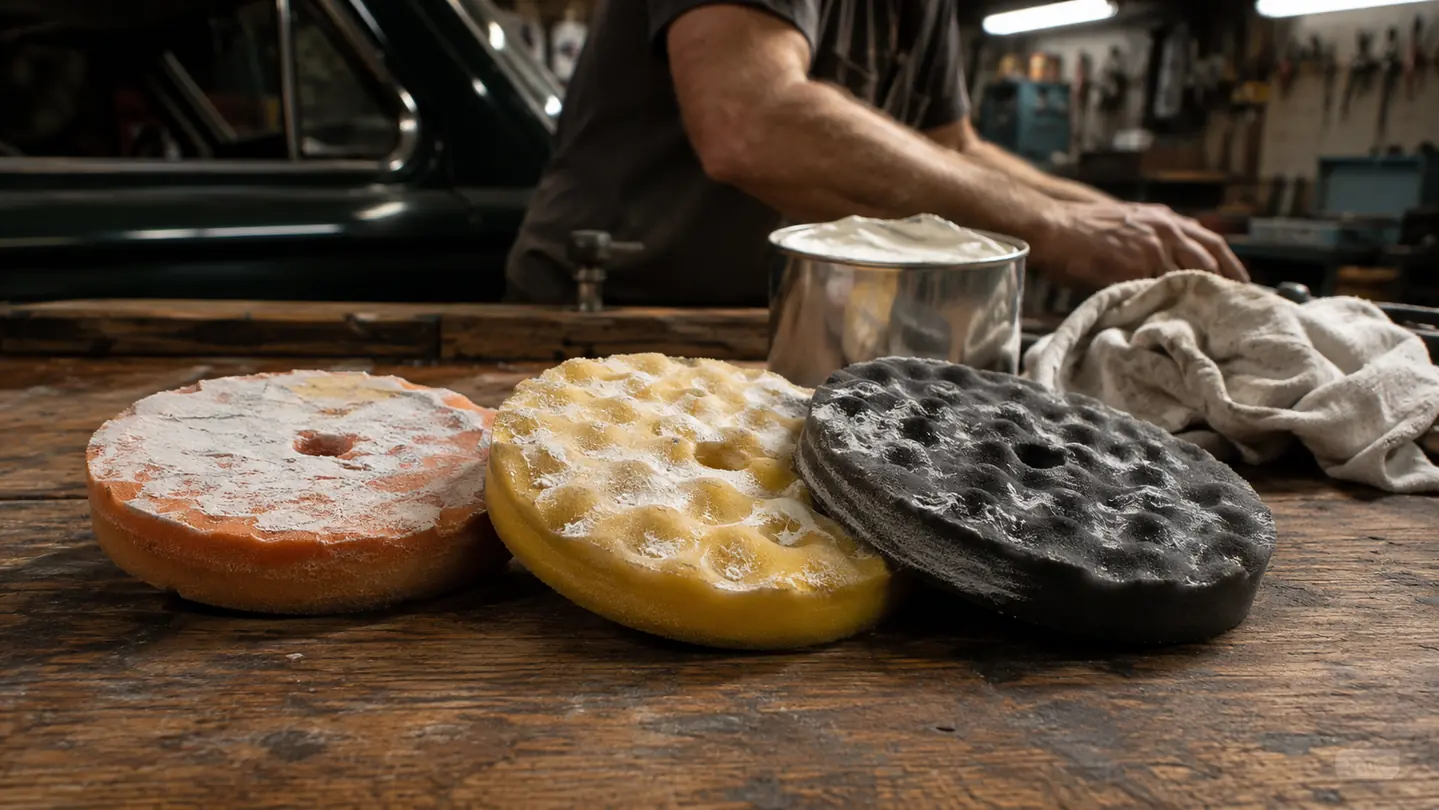
The kit ships with three foam pads, a cutting pad, a polishing pad, and a finishing pad, color-coded in the way that has become shorthand across every detailing brand. I will be straight with you: two of the three are cheap. The foam is soft enough that it wants to grab and fling compound, and on the sharp crease of a classic fender the pad edges wear noticeably faster than they should. By the middle of the season my original cutting pad looked dog-eared and I was already reaching for replacements.
I would not call it a dealbreaker, just a cost you should budget for before you buy. Plan on buying a couple of better aftermarket 5" to 6" hook-and-loop pads the first week, and the machine's character improves more than the sticker price suggests. The backing plate is a standard size, so any common detailing pad from the same size fits, no adapter games. It is a genuinely common hook-and-loop pattern, and that is worth a lot in a world of tools that only take proprietary parts.
The detachable side handle is a real help here, and it is a nicer detail than the price point usually provides. On a tall sedan fender you can run a one-handed pass, then both hands when you need control. Brutus, for the record, considered the handle the entire point of the box and carried it off once, which set me back the better part of a beer. The handle clicks in and out solidly and never rattled loose on me, which is more than I can say for some of the twist-and-pray handles I've owned.
The Cord, the Vibration, and Your Fingers
Now the parts nobody puts in the headline. The cord is serviceable but short, and a long-bodied car will not let you polish a full front quarter without stopping to dance around or plug into a second outlet. I ran a few extension cords all season and it was never a real problem, but it is worth knowing before the first time you have to stretch across a Double A stand to reach a rear fender.
The vibration is the other honest confession. This is a budget DA, and it transfers more of its orbit into your hands than a balanced premium machine will. After a solid hour of continuous work, the fingers on my guiding hand got that pins-and-needles feeling you learn to read like a warning light. It is not pain, it is not anything bad, but it is present, and it is exactly the kind of thing you only feel on hour two, the hour the five-minute reviews never cover.
I handle it the same way I handle any long shop job: I take breaks, I switch hands, and I do small sections instead of trying to finish a whole side in one sitting. Short sessions of twenty or thirty minutes with a break between are comfortable. Back-to-back two-hour marathons will test you. If your project is a full repaint-level correction across an entire car over several long days, your hands will talk to you by day two, and a better-balanced machine starts to earn its higher price more honestly.
If you are on the fence about whether a machine is worth it at all, here is the honest buying advice. Borrow or rent a dual action for one weekend before you spend a dime, and cut a faded fender with it. The AVID POWER is inexpensive enough that most people never bother to rent first, and that is fine, because the downside is a small one. But the question is not really whether the machine is worth the money. It is whether you will actually use it. A polisher only earns its keep if the car justifies it. If you have one car that you wash twice a year, keep doing it by hand. If you have old single-stage paint you want to actually look good again, the machine pays for itself in one weekend, and the AVID POWER is the one I would hand a first-time owner.
What It Honestly Can't Fix
Here is where I stop sounding like a salesman in my own head. A DA polisher, at any price, does not fix clear coat that is already gone, cracked, or deeply etched, it does not fill rock chips, and it will not resurrect paint that has burned down to primer. The AVID POWER, specifically, has no magic there, and neither does the pricier machine you might be cross-shopping against.
What sets the budget one apart is not that it fails where the expensive one succeeds. It's that it gets there more slowly and with more patience required. For removing fine scratches, light swirls, oxidation, and the chalky haze that sits on top of an otherwise sound single-stage job, it works. For the car that needs a respray, no amount of orbital patience will save you, and no pad in the box will either. Know the difference going in and you'll be a satisfied owner of a tool that stops far short of a miracle.
What I Liked
- Forgiving dual-action orbit keeps you from burning through paint when you respect it
- Light to moderate pressure cuts faded single-stage honestly and steadily
- Standard backing plate takes common aftermarket pads, no proprietary parts
- Detachable handle stays put and gives real control on tall panels
- Reliable enough for months of regular weekend use without smoking or quitting
Where It Falls Short
- Stalls dead under heavy downward pressure if you lean in like a floor buffer
- Two of the three included pads are cheap and wear fast on sharp body lines
- Cord is short enough to need an extension on a long car
- Noticeable vibration in your hands after an hour straight
- No way around a whole-car correction needing breaks and patience
Who This Is For
The AVID POWER DA is for the weekend restorer who is done hand-polishing and wants a first machine that will not punish a mistake. If you own a classic with faded or lightly swirled paint, you have steady hands, and you are willing to work in small sections the way you'd lay out good sheet metal, this is a real tool. It rewards the same patience I keep telling myself about on the shop floor and, for what it's worth, the same patience a hangar teaches you about the part that holds things together.
It is also for anyone who has never run a polisher at all and is afraid of burning through clear coat. The dual action design, on this machine, is genuinely forgiving. You can make a mistake and the worst that usually happens is a stalled pad, not a ruined panel. That is a safety margin worth money, even on a budget tool. If that describes your garage, this is a sensible first polisher that will probably stay in your drawer long after you've moved on to something fancier.
Ready to stop hand-polishing for good?
For faded classic paint and a beginner's first machine, the AVID POWER DA is a forgiving place to start. See today's price and whether it fits your drawer.
Amazon Check Today's Price on Amazon →Who Should Skip It
Skip it if your plan is a full show-car compound-and-polish pull across an entire car in a couple of long sessions. The stall under pressure, the short cord, and the vibration in your hands over hours will all work against you on the second car or the third day. If you already run a premium DA regularly and just want a spare, you will feel the step down every pass and probably regret the savings.
Skip it if the paint is already a lost cause. If the clear coat is gone, the surface is cracked, or it has burned through to primer, no polisher at this price is going to be your fix, and neither will one at three times the price. Spend your money on the honest repair first, and come back to a machine once you have real paint to polish. And if you are the kind of person who cannot resist hunkering into a rented floor buffer, respect what this tool is telling you, because it will stall on you all afternoon.
We wrapped this truth up the way the bulldogs unwrap leftovers at the end of a day in the garage. The AVID POWER is not the finest DA on the shelf, and I would not try to tell you it is. It is a dependable, forgiving, budget tool that will gladly spend its life on faded classic paint, as long as you feed it better pads and treat it with the patience that good restoration has always demanded. That is the honest version, and the honest version is the one worth buying on.